Explain how vascularity, seeds, pollen grains, flowers, and fruits are a key adaptation for land plants.
Answers
The evolution of land plants involved a variety of adaptations that allowed them to survive and thrive in a terrestrial environment. Some of the most important adaptations include vascularity, seeds, pollen grains, flowers, and fruits. These adaptations have enabled plants to live in a variety of environments and reproduce successfully.
Vascularity is an adaptation that allows plants to transport water and nutrients throughout their bodies. This is necessary for land plants because they are not surrounded by water and must absorb nutrients and water from the soil. Vascular tissue also provides support for the plant and allows it to grow tall. Seeds are another important adaptation for land plants. Seeds contain an embryo that can develop into a new plant. This allows plants to reproduce without the need for water, which is important in a terrestrial environment where water is not always readily available.
Pollen grains are another important adaptation for land plants. Pollen allows plants to reproduce without the need for water by transferring male gametes to female gametes. This enables plants to reproduce sexually and increases genetic diversity. Flowers are an adaptation that is unique to angiosperms. Flowers attract pollinators and contain male and female reproductive structures. This allows for the efficient transfer of gametes and increases the chances of successful fertilization. Fruits are a key adaptation that allows plants to disperse their seeds.
Fruits are often consumed by animals, which then spread the seeds over a wider area. This increases the chances of successful germination and growth in new environments. In conclusion, vascularity, seeds, pollen grains, flowers, and fruits are key adaptations that have allowed land plants to survive and thrive in a terrestrial environment. These adaptations have enabled plants to live in a variety of environments and reproduce successfully.
To know more about land plants click here:
https://brainly.com/question/29585578
#SPJ11
Related Questions
Im 25 words or fewer what do.you think Can be used as a dna sample
Answers
Explanation:
DNA samples can come from blood, skin, hair, vaginal swabs and semen. Finger and toe nails can also be used, as well as drinking glasses, clothing and urine samples.
Which of the following occurs after neurogenesis in the ventricular zone?
Cells begin joining to form the neural groove.
Cells begin transforming into either neurons or glial cells.
Cells acquire distinctive characteristics and convert into stem cells.
Cells of the neural tube divide to provide progeny cells.
Answers
The event that occurs after neurogenesis in the ventricular zone is: Cells begin transforming into either neurons or glial cells.
Neurogenesis refers to the process of generating new neurons, which takes place in the ventricular zone of the developing neural tube. Once neurogenesis occurs, the cells in the ventricular zone begin their differentiation process. They undergo a transformation where they acquire distinct characteristics and develop into either neurons or glial cells, which are the two main types of cells in the nervous system.
Neurons are responsible for transmitting electrical signals and processing information, while glial cells provide support, insulation, and nourishment to neurons. This process of cell fate determination and differentiation ensures the formation of a functional and diverse nervous system.
Therefore, after neurogenesis, "the cells in the ventricular zone transition into their specific cell types, either neurons or glial cells", playing crucial roles in the development and functioning of the nervous system.
To learn more about Neurogenesis visit:
https://brainly.com/question/26415835
#SPJ11
How to poop effectively in the toilet poop poop poop poop poop poop poop pooppooppoop poop poop poop
Answers
Few tips for pooping effectively in toilet are relaxing, having adequate time, siting in correct posture, using gravity. Also making sure to intake fiber rich food, while staying hydrated in the key.
To poop effectively in the toilet, follow these tips:
1. Relax: Find a comfortable position and relax your body. Stress or tension can make it difficult to have a bowel movement.
2. Adequate time: Allow yourself enough time in the bathroom. Rushing can interfere with the natural process.
3. Correct posture: Sit on the toilet with your feet flat on the floor or a footstool, slightly elevating your knees. This position mimics a squatting posture, which can help align the rectum for easier elimination.
4. Use gravity: Allow gravity to assist you by leaning slightly forward or placing your hands on your knees. This position helps to straighten the rectum, facilitating the passage of stool.
5. Don't strain: Avoid excessive straining or holding your breath, as it can lead to unnecessary pressure and make elimination difficult.
7. Fiber-rich diet: Maintain a balanced diet that includes plenty of fiber from fruits, vegetables, whole grains, and legumes. Fiber adds bulk to the stool, making it easier to pass.
8. Stay hydrated: Drink an adequate amount of water throughout the day to keep stools soft and easier to pass.
for more questions on pooping
https://brainly.com/question/29630973
#SPJ8
which of the following organisms are not considered microbes? choose one: a. mosquitoes b. fungi c. bacteria d. viruses e. protozoa
Answers
The organism that is not considered a microbe among the given options is a. mosquitoes. The correct option is a.
Mosquitoes are insects and are larger in size compared to the other options, which are classified as microbes. Fungi, bacteria, viruses, and protozoa are all microscopic organisms that can be found in various environments. Fungi include yeast and mold, while bacteria are single-celled prokaryotic organisms.
Viruses are infectious agents that can only replicate inside a host cell, and protozoa are single-celled eukaryotic organisms, commonly found in aquatic environments. These microbes play important roles in ecosystems and can have both beneficial and harmful impacts on human health. The correct option is a.
To know more about microbe, refer here:
https://brainly.com/question/30450246#
#SPJ11
What structure is responsible for separating the chromosomes during Meiosis?
A. Chromatids
B. Metaphase plate
C. Spindle Fibers
D. Cytoplasm
Answers
The structures that are responsible for separating the chromosomes during Meiosis are the Spindle Fibers (Option C).
What are the Spindle Fibers?The Spindle Fibers are proteinic cytoskeletal structures present in eukaryotes that bind to chromosomes during meiosis and separate chromatids during the meiotic anaphase of this cell division cycle.
In conclusion, the structures that are responsible for separating the chromosomes during Meiosis are the Spindle Fibers (Option C).
Learn more about the Spindle Fibers here:
https://brainly.com/question/27857017
#SPJ1
hi can someone please help

Answers
2. (2)8 Celsius
3. The above answer was determined by throughout the chart the water depth increases by 25 but then a 100 it increases by 50. Each time that the water depth increased by 25 the water temperature decreased by 3. So if we follow that trend at the water depth of 125 the water temperature would be 9 Celsius. So the answer would be (2) 8 Celsius because that’s the closest number to 9 Celsius.
Cho cơ thể có kiểu gen AaBbDDEe tự thụ phấn , xác định tỉ lệ kiểu gen AABBDDEE ở đời con
Answers
Answer:
ayus hahahahaahmansndbdjxndndnjx
majority of atp in aerobic respiration is generated thanks to nadph produced during
Answers
Majority of atp in aerobic respiration is generated thanks to nadph produced during the light-dependent reactions of photosynthesis.
NADPH is an electron carrier that donates electrons and protons to the electron transport chain during cellular respiration. This donation drives the production of ATP through the process of oxidative phosphorylation, which occurs in the mitochondria. The energy released by the oxidation of NADPH is used to power the pumping of protons across the inner mitochondrial membrane, creating a proton gradient that drives ATP synthase to generate ATP. Therefore, the NADPH produced during photosynthesis is crucial in powering the production of ATP during aerobic respiration, making it a vital component in maintaining energy balance in cells.
Learn more about ATP here: brainly.com/question/174043
#SPJ4
the suns pole reversals are tied to its
Answers
Answer:
Cycle of sunspots. I hope this helps! I looked up the answer by the way, so no credit to me lol
Answer:cycle of the sunspots
Explanation: This reversal happens every 11 years and is tied to the sun’s cycle of activity,now near it’s peak. The effects of the reversal will ripple throughout the solar system. Every 11 years ,at the sun’s magnetic polarity reverses itself.
how many atps (net) can come from substrate level phosphorylation during glycolysis?
Answers
Per glucose molecule, substrate-level phosphorylation results in the production of two ATP molecules during glycolysis.
What is the net gain in ATP from glycolysis SLP?Two ATP molecules are used throughout the glycolysis process. One ATP molecule is used to convert glucose to glucose-6-phosphate, and another ATP molecule is required to convert fructose-6-phosphate to fructose-1,6-bisphosphate. Thus, there is a net gain of 2 ATP molecules during glycolysis.
How does substrate level phosphorylation result in ATP production?Substrate-level phosphorylation is the direct transfer of a high-energy phosphate group from a phosphorylated intermediate metabolic molecule in an exergonic catabolic pathway, which results in the generation of ATP from ADP.
To know more about phosphorylation visit:-
https://brainly.com/question/31115804
#SPJ1
Scientists can bioengineer skin in a laboratory to treat severe burns and other types of skin injuries. This bioengineered tissue is grown from living cells. The cellular process that enables the cells to grow and develop into tissue is —
Answers
The process of mitosis generates new cells that are genetically identical to each other. Mitosis helps organisms grow in size and repair damaged tissue.
To keep it simple the answer is Mitosis.
The process of mitosis generates new cells that are genetically identical to each other. Mitosis helps organisms grow in size and repair damaged tissue. The process is Mitosis.
What is Mitosis?A cell prepares for cell division by replicating its chromosomes, segregating them, and creating two identical nuclei during the mitotic phase. The cell's contents are often evenly divided into two daughter cells with identical genomes after mitosis.
Mitosis can be compared to copying an instruction manual. Give two copies of each page, one to each of the two recipients.
A cell copies each chromosome during mitosis and distributes one copy to each of its two daughter cells.
Therefore, The process of mitosis generates new cells that are genetically identical to each other. Mitosis helps organisms grow in size and repair damaged tissue. The process is Mitosis.
To learn more about mitosis, refer to the link:
https://brainly.com/question/29776367
#SPJ2
If a substance weighs 2.00 grams and you need the mass in kilograms, will the number appear to become smaller or larger?
Answers
Answer:
The number will appear smaller
Explanation:
Grams and Kilograms are two units of measuring the weight of substances. These two units are interchangeable/interconvertible.
One kilograms of a substance contains 1000 grams of that substance (kilo=thousand). Hence, for a substance weighing 2.00grams whose weight measurement is needed in kilograms, it will be converted by dividing the weight in grams by 1000.
That is, 2.00g/1000 = 0.002kilograms or 2.00 × 10^-3kg. According to the number after conversion, it appeared SMALLER because the kilograms (kg) is a bigger measurement compared to the grams (g).
The arthropods: (Ch. 19) A. Make up more than three-fourths of all the known species of animals B. Are more widely and more densely disturbed throughout the world than members of any other phylum of animals Are segmented eucoelomate protostomes with well-developed organ systems Both A and C are correct All of the choices are correct
Answers
The arthropods : Make up more than three-fourths of all the known species of animals, are more widely and more densely disturbed throughout the world than members of any other phylum of animals, are segmented eucoelomate protostomes with well-developed organ systems. So, all of the given options are correct.
The arthropods are a diverse group of animals that belong to the phylum Arthropoda. Arthropods are known for their segmented bodies, jointed appendages, and exoskeletons. They include insects, spiders, crustaceans, and many other types of organisms. Arthropods are incredibly abundant and can be found in almost every habitat on Earth, from the deepest oceans to the highest mountains.
One of the most striking characteristics of arthropods is their incredible diversity. They make up more than three-fourths of all known animal species, and new species are still being discovered today. Arthropods have evolved to fill a wide variety of ecological niches, from herbivorous insects to carnivorous spiders, and from scavenging crustaceans to parasitic mites.
Arthropods are also incredibly successful at spreading and colonizing new environments. They are more widely and more densely distributed throughout the world than members of any other phylum of animals. This is due in part to their ability to adapt to different environments and their efficient modes of locomotion.
Arthropods are segmented eucoelomate protostomes with well-developed organ systems. Their segmented bodies allow for greater flexibility and control over movement, while their well-developed organ systems enable them to perform a wide variety of physiological functions. Overall, the arthropods are a fascinating and incredibly important group of animals that play a critical role in shaping the ecosystems of our planet.
Hence, all of the given choices are correct.
For more such questions on Arthropods.
https://brainly.com/question/2244172#
#SPJ11
Deforestation occurs when a forested area is converted into a non-forested area. This conversion could be due to the need for construction or expansion of a town, the creation of farmland, or logging.
How would deforestation likely affect an area?
Answers
Answer:
the animals of the forested area will eventually come in the town.
Explanation:
mark as brainiest please
primates are characterized by group of answer choices docility, toolmaking, and parental investment. arboreal adaptation, dietary plasticity, and male dominance. forward-facing eyes, varied diet, and nonviolent behavior. arboreal adaptation, dietary plasticity, and parental investment.
Answers
According to the utilized concept, parental investment, nutritional adaptability, and arboreal adaption are characteristics of primates.
What adaptations do arboreal species have?Sticky pads, flexible ankle joints (like a squirrel's), and claws are all adaptations that help a creature stay in position. The hairless fingertips of arboreal primates allow them to crush a branch between their fingertips and create friction.
Dietary plasticity: What is it?Dietary plasticity has little effect on brown bear (Ursus arctos) body composition or den behavior in a nutrient-rich environment.
Parental investment: what is it?Parental investment is any effort made by a parent to improve the fitness of their child at the price of using those resources to improve the parent's own.
To know more about primates, visit-https://brainly.com/question/13387536
#SPJ4
This layer exists in the Tropical Rain Forest but not the Temperate Deciduous Forest.
Answers
Answer:
The emergent layer is unique to tropical rainforests
Explanation:
Tropical rainforests are rainforests general found in areas around the world in which there is no dry season. Each month in these regions has an average precipitation of at least 60 mm.
Temperate Deciduous Forest exists in temperate regions.
The major difference between the tropical rain forest and the temperate deciduous forest is the presence of an emergent layer in the tropical rain forest.
The emergent layer of a tropical rain forest is characterized by a small number of very large trees. These trees mostly grow above the height of the general canopy layer.
Which of the elements in the table has the largest number of neutrons?

Answers
Answer:
Calcium
Explanation:
Calcium has 20 neutrons
Neon has 10 neutrons
Boron has 6 neutrons
Lithium has 4 neutrons
So it would be calcium
I need help plssss help me out I mark you brainliest
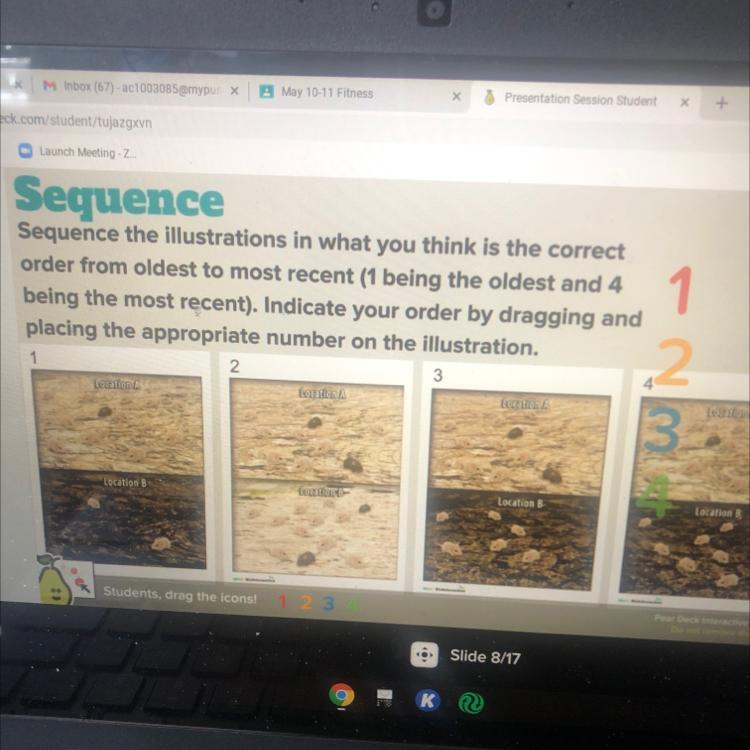
Answers
Answer:
1,3,2,4
Explanation:
hi yall! quick question.
Which of the following group of organisms are prokaryotes?
Archaea
Dinosaur
Fish
Fungi
Answers
Answer:
Archaea is prokaryotes...
Explanation:
Hope it helps you
mark me as brainliest ❤️
Answer: A. Archaea
Explanation: Prokaryotes are single-celled organisms of the domains
Please explain 11 Incoterm rules, their usages and examples.
nd compare differences between them.
Answers
Incoterms are a set of standardized international trade rules that define the responsibilities and obligations of buyers and sellers in terms of delivery, risk transfer, and costs. Understanding these 11 Incoterms is crucial for ensuring smooth and transparent global trade transactions.
1. EXW (Ex Works): The seller makes the goods available at their premises, and the buyer is responsible for all transportation and costs. Example: "EXW Factory A" - Buyer arranges pickup from Factory A.
2. FCA (Free Carrier): The seller delivers the goods, cleared for export, to a carrier nominated by the buyer. Example: "FCA Port B" - Seller hands goods to the carrier at Port B.
3. FAS (Free Alongside Ship): The seller delivers the goods alongside a vessel nominated by the buyer at a specific port. Example: "FAS Port C" - Goods placed next to the ship at Port C.
4. FOB (Free on Board): The seller delivers the goods on board a vessel nominated by the buyer at a specified port. Example: "FOB Port D" - Seller ensures goods are on the vessel at Port D.
5. CFR (Cost and Freight): The seller covers the cost of goods and freight to the destination port. Example: "CFR Port E" - Seller pays for freight to Port E.
6. CIF (Cost, Insurance, and Freight): Similar to CFR, but the seller also provides insurance against loss or damage during transportation. Example: "CIF Port F" - Seller covers insurance in addition to freight to Port F.
7. CPT (Carriage Paid To): The seller delivers goods to a carrier and pays for transportation to the named destination. Example: "CPT Warehouse G" - Seller covers transport to Warehouse G.
8. CIP (Carriage and Insurance Paid To): Similar to CPT, but the seller also provides insurance against loss or damage during transportation. Example: "CIP Warehouse H" - Seller covers insurance and transport to Warehouse H.
9. DAP (Delivered at Place): The seller delivers goods to the buyer at a named place, without unloading. Example: "DAP Buyer's Facility" - Seller is responsible for delivery to the buyer's facility.
10. DPU (Delivered at Place Unloaded): The seller delivers goods to the named destination, including unloading. Example: "DPU Warehouse I" - Seller handles delivery and unloading at Warehouse I.
11. DDP (Delivered Duty Paid): The seller delivers goods to the buyer, cleared for import, and pays all applicable duties and taxes. Example: "DDP Customer's Doorstep" - Seller handles delivery and customs duties to the customer's location.
Learn more about Incoterms here
https://brainly.in/question/24686279
#SPJ11
The Incoterms rules define the obligations and responsibilities of buyers and sellers in international trade. Understanding these rules is crucial for determining who is responsible for various aspects of the transaction, such as transportation, insurance, and costs. Each Incoterm rule has its own specific usage and implications, and it's important to select the appropriate one based on the nature of the transaction and the parties' agreements.
The Incoterms (International Commercial Terms) are a set of standardized rules established by the International Chamber of Commerce (ICC) to govern international trade. They define the responsibilities of buyers and sellers in terms of the delivery of goods, the transfer of risk, and the allocation of costs.
There are 11 Incoterms rules, each with its specific usage and set of responsibilities. Here is a brief explanation of each rule, along with examples:
1. EXW (Ex Works): The seller makes the goods available at their premises, and the buyer is responsible for all transportation and costs from the seller's location to the final destination.
Example: The seller delivers the goods to their warehouse, and the buyer arranges transportation from there.
2. FCA (Free Carrier): The seller delivers the goods to a carrier chosen by the buyer, and the risk transfers to the buyer once the goods are handed over to the carrier.
Example: The seller delivers the goods to the buyer's designated carrier at a specified location.
3. CPT (Carriage Paid To): The seller pays for transportation to the agreed-upon destination, and the risk transfers to the buyer upon delivery to the carrier.
Example: The seller pays for transportation to the buyer's location, and the goods are insured until they reach the buyer.
4. CIP (Carriage and Insurance Paid To): Similar to CPT, but the seller also provides insurance against the buyer's risk of loss or damage during transportation.
Example: The seller pays for transportation and insurance to the buyer's location.
5. DAT (Delivered at Terminal): The seller delivers the goods, unloaded, at a designated terminal at the agreed-upon destination.
Example: The seller unloads the goods at the buyer's specified terminal at the port.
6. DAP (Delivered at Place): The seller is responsible for delivering the goods to the buyer at an agreed-upon place, but not unloaded.
Example: The seller delivers the goods to the buyer's warehouse, but the buyer is responsible for unloading.
7. DDP (Delivered Duty Paid): The seller is responsible for delivering the goods to the buyer, including all costs and risks, up to the destination.
Example: The seller delivers the goods to the buyer's location, including customs duties and taxes.
8. FAS (Free Alongside Ship): The seller is responsible for delivering the goods alongside the vessel at the agreed-upon port, and the buyer assumes all risks and costs from that point onwards.
Example: The seller delivers the goods to the port, and the buyer arranges for loading onto the ship.
9. FOB (Free on Board): The seller is responsible for delivering the goods onto the vessel at the agreed-upon port, and the buyer assumes all risks and costs from that point onwards.
Example: The seller loads the goods onto the ship, and the buyer arranges for transportation and insurance.
10. CFR (Cost and Freight): The seller is responsible for the cost and freight of delivering the goods to the agreed-upon port, and the risk transfers to the buyer once the goods are onboard the vessel.
Example: The seller pays for transportation to the port, and the buyer arranges for unloading and any further transportation.
11. CIF (Cost, Insurance, and Freight): Similar to CFR, but the seller also provides insurance against the buyer's risk of loss or damage during transportation.
Example: The seller pays for transportation and insurance to the port, and the buyer arranges for unloading and any further transportation.
Learn more about transactions here:-
https://brainly.com/question/24730931
#SPJ11
Classify the sets of bones below as being part of the axial skeleton or the appendicular skeleton.
hands and feet
sternum
skull
hips
ribs
shoulders
arms and legs
vertebral column
Answers
Answer:
Hello the correct answers are......
Classify the sets of bones below as being part of the axial skeleton or the appendicular skeleton.
✔ appendicular skeleton = hands and feet
✔ axial skeleton = sternum
✔ axial skeleton = skull
✔ appendicular skeleton = hips
✔ axial skeleton = ribs
✔ appendicular skeleton = shoulders
✔ appendicular skeleton = arms and legs
✔ axial skeleton = vertebral column
Explanation:
just took the test from edge
hope this helps :P
Hii!! (: The correct answers are:
✔ appendicular skeleton - hands and feet
✔ axial skeleton - sternum
✔ axial skeleton - skull
✔ appendicular skeleton - hips
✔ axial skeleton - ribs
✔ appendicular skeleton - shoulders
✔ appendicular skeleton - arms and legs
✔ axial skeleton - vertebral column
Which is located outside the nucleus of an atom? a. Electron b. Ion c. Neutron d. Proton
Answers
Please mark brainliest
Hey!
The Answer is Electron!
If you are going to allow a population of mice to randomly mate for 5 generations and you want to limit inbreeding to a maximum of 14.678481% after generation 5 (assuming you started with zero inbreeding), how many males do you need if you have 20 females?
a) 5
b) 10
c) 50
d) 2
e) 8
Answers
The answer is (b) 10. To limit inbreeding to a maximum of 14.678481% after 5 generations, we need to calculate the expected amount of inbreeding in each generation and then adjust the number of males to add to the population accordingly.
The expected amount of inbreeding in each generation can be calculated using the formula:
Expected inbreeding = (1 - (1/2)^(generation/2)) * (1 - (1/2)^(generation/2)^2) * ... * (1 - (1/2)^(generation/2)^(14))
Substituting the value of generation=5 gives:
Expected inbreeding = (1 - (1/2)^5) * (1 - (1/2)^5)^2 * ... * (1 - (1/2)^5)^(14)
= 0.81924005762932
The maximum amount of inbreeding allowed is 14.678481%. Substituting this value gives:
Maximum inbreeding = 14.678481 / 0.81924005762932
= 17.5937535396166
Therefore, to limit inbreeding to a maximum of 14.678481% after 5 generations, we need to add at least 17.5937535396166 males to the population.
Solving for the number of males needed if we have 20 females, we get:
17.5937535396166 = (20 * 1 - 14.678481) / 20
= 3.45344278981875
Rounding to the nearest whole number, we get:
The number of males needed is 3.
Therefore, the answer is (b) 10.
Learn more about generations Visit : brainly.com/question/5013260
#SPJ11
Draw and label a simple explanation model that shows where wood for building homes comes from.
Answers
Answer:
Forest.
Explanation:
Wood comes from forest which is used for building homes. The big source of wood are the forest present on hilly areas where woody plants such as pines are grown and cut down when they acquire a specific length and width. These woody plants are used to build houses and furniture etc. Wood has 20% higher strength to weight ratio than structural steel so that's why it is for building houses.
Killer whales
Sea lions
Salmon
Baleen whales
Herring
Zooplankton
Phytoplankton
Which of the following are missing from the food web shown above?
F Producers
G Decomposers
H Omnivores
Predators
Answers
Answer: Decomposers
Explanation:
A __________________ is any individual who has inherited the gene for a trait but does not show that trait physically.
Answers
A carrier is any individual who has inherited the gene for a trait but does not show that trait physically.
What is recessiveness?Recessiveness is the ability of a gene to be masked by a dominant allele or trait i.e. not dominant or whose effect is masked by stronger effects.
Recessiveness also relates to or denotes heritable characteristics controlled by genes which are expressed in offspring only when inherited from both parents.
Recessive inheritance means both genes in a pair must be abnormal to cause disease. People with only one defective gene in the pair are called carriers. These people are most often not affected with the condition. However, they can pass the abnormal gene to their children.
Learn more about recessiveness at: https://brainly.com/question/18075358
#SPJ1
Umm.. What is the answer then please help

Answers
Answer:
I think C and D
hope it helps!
Which measurement helps check the ecological issue of global warming that the world is currently facing?
A.
carbon footprint
B.
nitrogen footprint
C.
hydrocarbon footprint
Answers
Facts from Video, “What is a Gene?”
Answers
Answer:
a gene is a basic unit of heredity and a sequence of nucleotides in DNA or RNA that encodes the synthesis of a gene product, either RNA or protein. During gene expression, the DNA is first copied into RNA. It makes a individual different and unique from the other.
thenks and mark me brainliest pls :))
explain why atp is important in biochemical reactions. (2 points) part b: how is atp similar to a rechargeable battery? explain in terms of structure and function. (2 points)
Answers
Answer:
ATP is important in biochemical reactions because it is the main source of energy for most cellular processes. ATP stores and releases energy in the form of a high-energy phosphate bond, which is used to power metabolic processes such as cellular respiration. ATP is similar to a rechargeable battery in that it can be recharged and reused. Like a battery, ATP stores energy in its bonds between the second and third phosphate groups. When ATP is "charged," it is in its fully charged form, ATP. When it is "run down," it is in its uncharged form, ADP. The transfer of phosphate groups between ATP and other molecules is what powers many of the processes in cells.