REPORT: NEW WORLD EXPLORERS
Here is your goal for this assignment:
Write a report on the exploration and colonization of America
Select from one of the following four major European exploration and colonization groups of America: Spanish, French, Dutch, and English. Research one of the countries of your choice by using at least three research sources, including the internet.
Using your research information, write a report that identifies the reasons for that country to explore and colonize America. It is important to think about classifying the reasons for exploration and colonization as either economic, political, or religious. Indicate also what impact the search for the Northwest Passage had upon exploration and colonization.
The report should be typed using proper grammar, spelling, and punctuation. Your report should be 300 words in length. List your sources at the end of the report.
Answers
Answer:
The Colonization of North America
European countries began to send more explorers to search for riches and claim territory for their respective countries. The quest for more territory quickly became a competition in North America. The map below illustrates the location of European settlements in North America around 1750. Using the map key, click on each country to locate where they colonized in North America.The English began to consider North America as a valuable source of raw materials as well as a marketplace for English goods.During the late sixteenth and early seventeenth centuries, colonization by the English rapidly increased, and soon the first permanent English colony was established at Jamestown, Virginia, in 1607. Click on the link below to watch the video about life in JamestownPeople moved into the colonies in great numbers because of the opportunities that the American colonies held. Many people left England to seek religious freedom and avoid persecution by the Church of England.The people who moved into the American colonies were ethnically diverse, came from a variety of religions, and represented all social groups. By 1775, the English settlements expanded from one settlement in Jamestown, Virginia, to thirteen American colonies.Spanish Settlements Unlike Mexico and South America, Spain’s settlements to the north yielded little gold and silver. This fact, along with conflict with American Indians in the region, made it difficult to attract colonists. As a result, early Spanish settlements in Texas, New Mexico, and California were largely confined to religious missions focused on converting American Indians to Catholicism, a few small civilian towns, and military posts. It was not until 1749 that Spain established the first civilian town in Texas, a town that eventually became Laredo.Like England, Spain followed an economic philosophy known as mercantilism. Spain sought colonies as sources of raw materials and markets for its manufactured goods. To protect its own manufacturers, Spain restricted colonial trade with other countries and limited colonial manufacturing. Colonies were governed by crown-appointed viceroys or governors. Unlike English colonists, Spanish colonists could not make any laws of their own. It is important to understand that attitudes toward class and race in Spanish territories differed from the attitudes in the English colonies. In the English colonies, there was less intermarriage between the English and the American Indians. The Spanish colonies were characterized by colonists of mixed racial backgrounds. Mestizos (people of mixed Indian and Spanish ancestry), American Indians, and Africans were concentrated at the lower levels of the social structure.
Explanation:
Related Questions
When were "Nursemaids" most popular to have?
The domestic worker, not the elbow thing.
Answers
what role did Robert Clive play in the downfall of the "Mughal" Empire?
Answers
The Constitutional principle of checks and balances is exemplified by...
A) trail by jury
B) separation of church and state
C) presidential veto
D) tterm limits
Answers
Which Constitutional principle reflects the influence of the Mayflower Compact?
A.
inalienable rights
B.
self-government
C.
checks and balances
D.
limited government
Answers
Answer:
B. self government
Explanation:
Answer:
I think it is B.
Explanation:
Let me know if I got it wrong if I do then I'm sorry.
Why did Bienville start a war with the Chitimacha?
The Chitimacha stole food and supplies from a French settlement
The Chitimacha killed a French enslaver
The Chitimacha had furs they would not trade with Bienville
Answers
Answer:
I think its b
Explanation:
What was so amazing about the island home of Aeolus, Lord of the Winds?
Answers
Answer:
AIOLOS (Aeolus) was the divine keeper of the winds and king of the mythical, floating island of Aiolia (Aeolia). He kept the violent Storm-Winds locked safely away inside the cavernous interior of his isle, releasing them only at the command of greatest gods to wreak devastation upon the world.
Explanation:
If a researcher wanted to gather quantitative data on a business, which question would be best it ask

Answers
c
quantitative data is based off of numbers, so c would be the correct answer! hope that helps
May someone help? Will give brainliest and 100 points. Just answer with the letter? NO LINKS PLEASE

Answers
Answer:
the answer is 7. g 6. b 5. c 3. f 2. d
Answer:
(7 - g) (6 - b) (5 - c) (3 - f) (2 - d)
Explanation:
Are elephant seals in danger of becoming extinct today?
Answers
Answer:
Today, there are somewhere between 120,000-150,000 elephant seals — a number likely close to their historic population. They have long since been removed from the endangered species list, though they are still protected in the U.S. by the Marine Mammal Protection Act.
Explanation:
Answer:
yes they are they are still being poached and hunted down for tusks. ivory and meat
Explanation:
Mr. Walker invested $65,100 in two banks, one paying 4. 5% and the other 6%. If he gets $231 more on the 6% investment than that on the 4. 5% investment, find the total annual income from the banks
Answers
The total annual income from the banks is $12,171.
How did we get the value?Let's assume that Mr. Walker invested x dollars in the bank that pays 4.5% interest, and therefore (65,100 - x) dollars in the bank that pays 6% interest.
The interest earned on the investment that pays 4.5% is (0.045x), and the interest earned on the investment that pays 6% is (0.06(65,100 - x)).
From the problem statement, we know that the interest earned on the 6% investment is $231 more than that on the 4.5% investment. So we can set up the following equation:
0.06(65,100 - x) - 0.045x = 231
Simplifying this equation, we get:
3,906 - 0.06x - 0.045x = 231
Combining like terms, we get:
0.015x = 3,675
Dividing both sides by 0.015, we get:
x = 245,000
So Mr. Walker invested $245,000 in the bank that pays 4.5% interest, and therefore invested (65,100 - 245,000) = $19,100 in the bank that pays 6% interest.
The total interest earned on the 4.5% investment is (0.045 * 245,000) = $11,025, and the total interest earned on the 6% investment is (0.06 * 19,100) = $1,146.
Therefore, the total annual income from the banks is ($11,025 + $1,146) = $12,171.
learn more about interest: https://brainly.com/question/25793394
#SPJ1
Which types of forces were responsible for shaping the landscape/topography in Alabama, tension, compression, shearing and why?
Answers
Explanation: The forces of the war had shaped the landscape
Who was Léonard Autié
Answers
Answer:
Explanation:
Léonard-Alexis Autié, also Autier, often referred to simply as Monsieur Léonard, was the favourite hairdresser of Queen Marie Antoinette and in 1788–1789 founded the Théâtre de Monsieur, "the first resident theatre in France to produce a year-round repertory of Italian opera."
Which landforms are found in the western United States?
Choose all answers that are correct.
canyon
coastal plain
mesa
plains
Answers
Answer:
plains,mesa
Explanation:
The West contains several major biomes, including arid and semi-arid plateaus and plains, particularly in the American Southwest; forested mountains, including two major ranges, the American Sierra Nevada and Rocky Mountains; the long coastal shoreline of the American Pacific Coast; and the rainforests of the Pacific
How did the talents of individuals Europeans like von Steuben, Pulaski, and Kosciuszko strengthen the cause of American independence?
Answers
Answer:
Von Steuben trained and disciplined the Continental Army, Pulaski organized and led the Calvary, and Kosciusko designed and built fortifications.
Explanation:
history is the only class i get 100 in but i dont know this lol

Answers
Answer:
Some of the negative effects of the Prohibition were a drastic rise in organized crime as well as the manufacturing of bootleg(illegal) liquor.
The 18th amendment did not last in the United States for several reason, one of which being the drastic rise in organized crime in the following years of its passing.
Explanation:
Hello! Please read these theories on How the Native Americans Migrated. Choose one and tell me why you agree with it.
First Theory
Archeologists have thought they knew how ancient humans arrived on the American continent
for about the past 50 years. As of 2008, genetic findings are suggesting that a single population
of modern humans migrated from southern Siberia toward the land mass known as the Bering
Land Bridge as early as 30,000 years ago, and crossed over to the Americas by 16,500 years ago.
Archaeological evidence shows that by 15,000 years ago, humans had made it south of the
Canadian ice sheets. As the ice caps in Canada began to melt, a path southward emerged.
Archeologists call these people Clovis, after some stone tools from the era were found near
Clovis, New Mexico in the 1920’s and 1930’s . This may be the earliest migration the scientists
have uncovered but it certainly isn’t the only one.
Second Theory
From the 1930’s all the way to the 1990’s. The Clovis people were thought to be the only
migration theory. In 1997, archeologists made a discovery of an archaeological site in Monte
Verde, Chile, dating back to 14,500 years ago - a full millennium older than what was previously
thought to be the first people in the new world, and indicating they settled much further south
than expected. These new finding sparked much debate about the first humans migrating to the
Americas. Many new questions were asked. Did they in fact come across the Bering Land
Bridge? Could they have arrived in South America via a different route?
Intense criticism also rained down on competing theories of how people arrived, such as the idea
that early Americans might have skirted the coastline in boats, avoiding the Bering land bridge
entirely. “I was once warned not to write about coastal migration in my dissertation. My adviser
said I would ruin my career,” says Jon Erlandson, an archaeologist at the University of Oregon in
Eugene.
Third Theory
The Third theory is viewed as the more radical theory. This theory claims it is possible that the
first Americans didn't cross the Bering Land Bridge at all and didn't travel by foot, but rather by
boat across the Atlantic Ocean. Though the evidence for this theory is minimal, proponents argue
that the artifacts were developed by an earlier and still more ancient European group, known as
the Solutrean culture. This style bears an uncanny resemblance to that of the Clovis tools found
in the United States, which could suggest that humans may have entered America from the east
over a route that has been dubbed the Atlantic Maritime route. This theory looks at writing and
language of the time. Many scientists claim the people of the time had similar characteristics to
tribes in Australia and Southeast Asia. Support for this idea is found partially in the discovery of
a 9,500-year-old skeleton in Washington State. Dubbed the "Kennewick Man," the skeleton
bears a strong physical resemblance to the Japanese Ainu people, suggesting that a pan-Pacific
journey via boat might have brought the first Americans to our shores.
Answers
Catherine Helen Spence (1825–1910) was an Australian famous for A) being a suffragette. B) establishing schools. C) leading the independence movement. D) becoming the country's first female Prime Minister.
Answers
Answer:
D) becoming the country's first female Prime Minister.
Explanation:
Answer:
D
Explanation:
I hope it helps you!
Snake Story
Becky moved off of the porch slowly, backing through the door and into the house. She slammed the sliding glass door shut and stood for a moment, relieved to have something solid between her and the snake on the porch.
The glass was cool under her hands despite her pounding heart. She tried to slow her breathing. She was safe, at last, inside. Or was she? How had that snake gotten into the screened-in and walled-up back porch. If it could get in there, it's possible it could get inside where she was as well.
Becky wasn't someone who was normally skittish about wild things. She'd handled snakes before, picked up lizards many times, caught frogs in the garage and let them go. But snakes seemed to always catch her off guard. They would turn up when least expected. She would see them out of the corner of her eye and just the surprise of it would make her jump; her adrenalin would pump, her heart would thump, and her panic would take over.
What was she going to do? She couldn't just stand there waiting for the snake to decide to leave. What if it were venomous? It didn't look like a viper, but it could be. She would need to get out there soon to water the plants.
"What this requires is some advanced planning," she said out loud to her cat, Louie. "And, I will probably have to go 'once more into the fray' kitty," she said, looking in the cat's direction for emphasis.
"First things first, though," she said. The cat meowed back. It often did that, having become used to being talked to. "Let's look that fellow up," Becky said walking to her bookshelf.
"Let's see, snakes," she said, thumbing through her reptile and amphibian identification book. "It's brown and gray, with some black. With a pattern that looks ... there it is," she said thumping the page so hard that Louie jumped. "Not venomous," she said, triumphantly.
"It's an oak snake, Louie," she returned the book and strode over to her closet. "Not venomous, but I am still not taking chances," she said.
She reached into the closet and pulled out her heaviest jacket. It was lined and stuffed thick with lots of padding. Then she found her mittens and a pair of rubber boots. She knew even non-venomous snakes would sometimes threaten to strike when scared. "And that threat would work on me," Becky said aloud again, though Louie had no idea what she was talking about.
"It's 90 degrees outside, Louie," she said, "so get the iced lemonade ready for when I return."
It wasn't much of a plan, but it was the best she could come up with. With her armor on, she was already sweating when she slowly pushed open the sliding glass door and stepped back on to the porch.
She was pretty sure the snake would slither away from her presence. She propped open the outside door, and hoped she could shoo the snake in that direction.
Sweat dampened her arms and collected on her face. She spread her arms out, and took a few steps toward the snake. There was so much for it to hide beneath. Becky regretted the rocking chairs and all the plant stands between where the snake was in the corner and the door to the outside.
At first it seemed like the snake was just going to remain where it was, flicking its tongue every now and then. Becky waved her arms, lunged in its direction, and stomped her feet. It sat there, coiled in the corner, as if perfectly happy to remain there. In a fit of desperation, she picked up one side of the rocking chair the snake was under and let it drop. The snake jumped, raised its head like it was going to strike, and then stayed right where it was.
"Snake," Becky said, "This is not how it works. You have got to go." The snake moved its head back and forth, swaying a bit, and that gave Becky an idea.
She had read somewhere that snakes can "hear" thanks to the ability to process vibrations through the bone in their jaw. This awareness of vibrations in the ground was one reason it was very hard to sneak up on snakes. She quickly realized that getting the snake out was going to be a lot easier than she had thought.
Becky turned on the radio she kept on the porch and lowered it to the ground, pointing in the snake's direction. She adjusted the controls so that the bass was as high as it could go. Then she cranked up the volume. She envisioned the snake swaying to the sounds of "Dancing Queen by Abba, and then leaving the porch and going far far away.
Coming back into the house she began peeling off the now damp armaments she had put on earlier. "Louie, there is more than one way to skin a snake," she said laughing. She watched as the snake uncoiled and moved cautiously in the direction of the door. Bending down to pick up Louie Becky sighed and stroked his head. "'Cause no one ever wants to skin a cat sweetie
The glass was cool under her hands despite her pounding heart. She tried to slow her breathing. She was safe at last inside.
What is the main purpose of this sentence in the story?
a
Create tension
b
Describe the setting
c
Resolve conflict
d
Lessen tension
Answers
Answer:
a
Explanation:
Can someone answer all three? Thank you! Will give brainliest. (Please do not give answers from google)

Answers
Answer:
no answer
Explanation:
in order for me to answer these questions i have to know what story the questions are refering to
Please help me answer this!
In 3 sentences tell me how the Renaissance and the Protestant Reformation changed how people saw religion and themselves.
Answers
The proposed constitution actually strengthened the power of states that allowed enslavement in several ways. Through the "fugitive clause," for example, governments of free states had to help recapture people who had escaped their enslavers in other states.
Equally disturbing was the "three-fifths formula." Enslavers wanted the people they'd enslaved to be counted as part of the state's population, since a higher state population meant more power in government. So, states that allowed enslavement and free states came up with a compromise.
What was this compromise called?
A)Compromise of 1787
B)3/5 Compromise
C)Northwest Compromise
D)The Great Debate
Answers
Answer:
it’s C
Explanation:
not A due to it never mentioning the year, 1787
not B due to no percentages
not D because of no debates held
The table below compares the economies of two countries.
Country A Country B
Main crop is wheat Main crops are wheat, corn, and potatoes
Primary product is flour Produces a variety of products including flour, processed foods, and bio-fuels
Which statement is accurate based on the information in the table?
Country A's economy is more diversified than country B's economy
Country B's economy is more diversified than country A's economy
The economies of both countries are equal in level of diversification
The economies of both countries can be described as single resource
Answers
Answer:The statement that is accurate based on the information in the table is that Country B's economy is more diversified than Country A's economy.
Explanation:The table shows that Country A's main crop is wheat and its primary product is flour. In contrast, Country B produces a variety of products including flour, processed foods, and bio-fuels and has main crops that are wheat, corn, and potatoes. This suggests that Country B has a more diversified economy than Country A.
A area or nation's usage of a wide variety of economic activities or differences in its economic status are referred to as economic diversity or economic diversification. Hence option B is correct .
What is diversified Economy ?
Diversification is a tactic used to promote healthy economic development and growth.
A corporation that uses diversification as a business strategy expands rather than specialises by entering a market or field that is unrelated to its core industry. Some business executives think cash should be distributed so as to limit exposure to any one specific asset or risk. Others, however, contend that in the current economic climate, specialisation is the only viable strategy.
Diversification has historically been attempted to lower the risk of relying on just one or a few income sources - not putting all your eggs in one basket.
Commercial organisations can avoid seasonal or cyclical variations by diversifying their product lines or service offerings to meet a range of demand cycles. It can occasionally lead to rapid growth.
please help me answer this <33
Answers
Why is this portrait of Pocahontas important to the study of the early colonies in North America?
A:It was painted by a famous artist.
B:it is valuable to art collectors and museums.
C:It is a rare record of dress in the English colonies.
D:it is a rare portrait of an important woman in history.
E:It documents the relationship between early English settlers and Native Americans.
2 ANSWER"S PLEASE!!! :>
Answers
Answer:
D
Explanation:
She helped English settlers Louis and Clark and for that she is an important part of our early American history
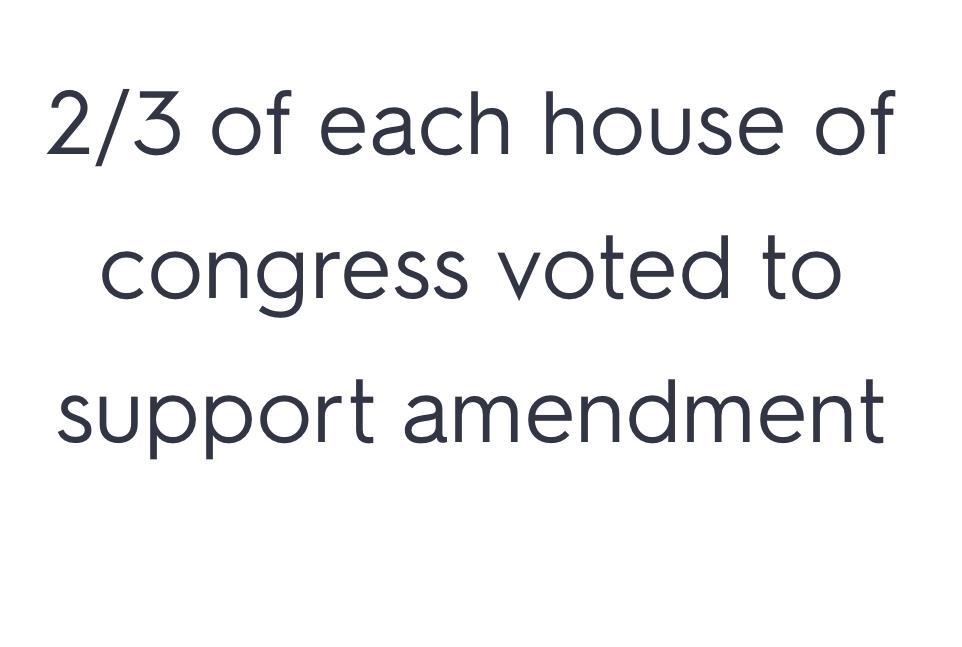
The newspaper headline below describes an event in U.S. history. Based on the headline, what happened before the event presented in the image u.s. is voted dry? Question 9 options: The president forwarded the amendment to the states after Congress voted to support it. The president rejected the amendment after Congress voted to support it. Two-thirds of each house of Congress voted to support the amendment. Three-fourths of each house of Congress voted to support the amendment.
Answers
Answer:
the last one
Explanation:
3/4 of each house voted to support the amendment
Explanation: I searched it up on quizlet.
Please help I really don't wanna fail this is so hard
I will give brainliest to the person with the CORRECT ANSWERS !
Please don't do it for the points :⊂


Answers
Answer:
the answer for 6 should be option b and for question 7 it should be option a
Explanation:
7.A
Hope this helps
Can someone help me with this?

Answers
I NEED HELP ASAP THIS IS DUE TODAY
Explain the cause and effect of the schism of 1094. C.E. in your own words
Answers
Which battle that took place during the American Revolution briefly boosted colonial morale until the British recaptured the city the following month?
a. the Battle of Valley Forge
b. the Battle of Long Island
c. the Battle of Saratoga
d. the Battle of Trenton
Answers
The battle of Trenton
This article could be placed in a category of news called "Eye on People." In which other category would this article fit best?
A.University Leadership
B.Advances in Medicine
C.Motorcycle Safety Guidelines
D.Cosmetic Surgeons in England
NOT D I GOT THAT WRONG
Answers
Answer: I don't know
Explanation:
Based on the information provided, none of the categories listed seem to be a good fit for the article. The article is about the U.S. Constitution, specifically the amendment process, and does not relate to university leadership, advances in medicine, motorcycle safety guidelines, or cosmetic surgeons in England. A more appropriate category for this article might be "Politics" or "History and Government."