PLEASE PLEASE BRAINLIEST HELP ME PLEASE SOMEONE VARY SMART PLEASE SOMEONE THAT IS ACE PLEASE OR AN EXPERT OR SOMEONE FROME THE LIST OF BRAILIEST PLEASE can somebody help me please ill mark brailiest please this is the story
Theory of Plate Tectonics
1 Earth is not like the other planets in the solar system. Earth has layers, much like an onion. These layers provide answers to many questions. Earth's crust, the outermost layer, is not entirely one piece. It is broken into sections which resemble a huge jigsaw puzzle. These giant sections are known as plates. They are always on the move, creeping along at a snail's pace. The plates seem to float on top of the mantle, the layer of Earth composed of partially melted rock.
2 Have you ever put together a puzzle? The pieces must fit together perfectly in order to form a picture. Alfred Wegener was a German scientist. Over 100 years ago, he discovered something fascinating about a map of Earth. Wegener realized that the continents seem to fit together like the pieces of a jigsaw puzzle. This giant piece of land was called Pangaea. It existed over 250 million years ago. Over time, Pangaea's tectonic plates slowly drifted apart. These plates in their current positions make our seven continents.
3 Earth's plates are continually being created or recycled. Scientists have studied the ocean floor. They have discovered ridges of mountains along the bottom of the ocean. These ridges form where two plates have started to move apart. Molten rock from the underlying mantle oozes out. Newly formed rock builds up in the space that has been created by the plates' movement. Plate tectonic theory has also helped scientists explain the deep ocean trenches. These deep ocean trenches are areas where plates are being recycled. This can happen where two plates push together. The crust on the edge of one plate is slowly forced under the other. The plate gets pushed back down into Earth's mantle. It will become molten rock again. This type of area is known as a subduction zone. It forms when continental land masses collide with ocean plates, or when two ocean plates collide with each other.
4 On the ocean floor, movement of the plates causes trenches and ridges. Plate movement can do more than that. It can also form mountains on land. When two continental plates push together, there is so much force that the plates buckle. Massive mountain ranges are formed. The friction during crustal movement can sometimes cause earthquakes and tsunamis.
5 The plates on Earth's crust change Earth's surface features in many ways. They had been pieced together in a giant landmass. The plates slowly moved apart to their current locations. The plates will continue to move, forming new rocks and recycling the old. Imagine how a map of Earth might look after another 250 million years of continental drift.
and down below are the questions to the article can you please help me


Answers
Answer:
1: A
2: C
3: D
4: D
5: B
Explanation:
3) D
1) C
2) C
5) A
I hope I helped you:)
Have a great day!
Related Questions
a particular atom of an element has 18 protons, 22 neutrons, and 18 electrons. which characteristics determine its identity
Answers
explanation: with elements on the periodic table, the number of protons always equals which order it goes in on the table.
e.g, Hydrogen is the first element on the periodic table which means it has one proton.
TL;DR
number of protons determines Element name/identity
i hope that helped :)
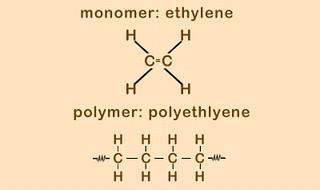
1.How does ethylene relate to polyethylene?
2.Which of the two molecules would most likely be a plastic?
3.Propose a simple process for how polyethylene is physically produced.
NO LINK ANSWERS
This is a written answer
Answers
Answer:
1.ansEthylene is at this point still a gas and needs pressure and a catalyst to turn it into polyethylene, a resin. The process by which polyethylene is made from ethylene is known as polymerization. ... Polymerization occurs when a chemical reaction causes molecules to react together to form polymer chains
2.ansPlastics are a wide range of synthetic or semi-synthetic materials that use polymers as a main ingredient. Their plasticity makes it possible for plastics to be moulded, extruded or pressed into solid objects of various shapes. This adaptability, plus a wide range of other properties, such as being lightweight, durable, flexible, and inexpensive to produce, has led to its widespread use. Plastics typically are made through human industrial systems. Most modern plastics are derived from fossil fuel-based chemicals like natural gas or petroleum; however, recent industrial methods use variants made from renewable materials, such as corn or cotton derivatives.[1]
In developed economies, about a third of plastic is used in packaging and roughly the same in buildings in applications such as piping, plumbing or vinyl siding.[2] Other uses include automobiles (up to 20% plastic [2]), furniture, and toys.[2] In the developing world, the applications of plastic may differ; 42% of India's consumption is used in packaging.[2] In the medical field, polymer implants and other medical devices are derived at least partially from plastic. Worldwide, about 50 kg of plastic is produced annually per person, with production doubling every ten years.
The world's first fully synthetic plastic was Bakelite, invented in New York in 1907, by Leo Baekeland,[3] who coined the term "plastics".[4] Dozens of different types of plastics are produced today, such as polyethylene, which is widely used in product packaging, and polyvinyl chloride, used in construction and pipes because of its strength and durability. Many chemists have contributed to the materials science of plastics, including Nobel laureate Hermann Staudinger, who has been called "the father of polymer chemistry" and Herman Mark, known as "the father of polymer physics".[5]
The success and dominance of plastics starting in the early 20th century has caused widespread environmental problems, due to their slow decomposition rate in natural ecosystems. Toward the end of the 20th century, the plastics industry promoted recycling in order to assuage environmental concerns while continuing to produce virgin plastic. The main companies producing plastics doubted the economic viability of recycling at the time, and this is reflected in contemporary plastic collection. Plastic collection and recycling is largely ineffective because of the complexity of cleaning and sorting post-consumer plastics. Most plastic produced has not been reused, either being captured in landfills or persisting in the environment as plastic pollution. Plastic pollution can be found in all the world's major water bodies, for example, creating garbage patches in all of the world's oceans and contaminating terrestrial ecosystems.
Explanation:
3.ansPolyethylene or polythene (abbreviated PE; IUPAC name polyethene or poly(methylene)) is the most common plastic in use today[when?]. It is a polymer, primarily used for packaging (plastic bags, plastic films, geomembranes, containers including bottles, etc.). As of 2017, over 100 million tonnes of polyethylene resins are being produced annually, accounting for 34% of the total plastics market.[5][6]
Many kinds of polyethylene are known, with most having the chemical formula (C2H4)n. PE is usually a mixture of similar polymers of ethylene, with various values of n. It can be low-density or high-density: low-density polyethylene is extruded[verification needed] using high pressure (1000–5000 atm) and high temperature (520 kelvins), while high-density polyethylene is extruded[verification needed] using low pressure (6–7 atm) and low temperature (333–343 K). Polyethylene is usually thermoplastic, but it can be modified to become thermosetting instead, for example, in cross-linked polyethylene.
plz answer fast in 3 sentences thx (XOXO) ;) will give brianly
Why is the use of the inquiry process (or scientific method) a practical way to approach science?
1.
2.
3.
Why are scientific theories modified, but seldom discarded?
1.
2.
3.
How has science and technology influenced everyday life?
1.
2.
3.
Answers
Answer:
Explanation:
Why is the use of the inquiry process (or scientific method) a practical way to approach science?
1. The inquiry process is a practical way to approach science because the inquiry process begins by asking questions and moving on from there.
2. In science it is important to investigate phenomena or certain subjects by posing questions that you would like to answer through the scientific method.
3. Therefore, the inquiry method is connected because to inquire on a subject requires raising questions which is an essential step in scientific discovery.
Why are scientific theories modified, but seldom discarded?
1. If a theory cannot explain new evidence or observations then the theory is revised or even thrown
out, but if the theory still explains a wide range of observations and evidence then it is revised
rather than discarded.
2. it will still hold some value as above as you learn more you tweak your hypothesis to fit the ever expanding amount of info and data you collect and assimilate
3. The only way they ever go away is if people stop working on them.
How has science and technology influenced everyday life?
1. computers
2. health care
3. bikes
None of these would exist today without science or technology
Answer:
Explanation:
Why is the use of the inquiry process (or scientific method) a practical way to approach science?1. The inquiry process is a practical way to approach science because the inquiry process begins by asking questions and moving on from there. 2. In science it is important to investigate phenomena or certain subjects by posing questions that you would like to answer through the scientific method.3. Therefore, the inquiry method is connected because to inquire on a subject requires raising questions which is an essential step in scientific discovery.Why are scientific theories modified, but seldom discarded?1. If a theory cannot explain new evidence or observations then the theory is revised or even thrownout, but if the theory still explains a wide range of observations and evidence then it is revisedrather than discarded.2. it will still hold some value as above as you learn more you tweak your hypothesis to fit the ever expanding amount of info and data you collect and assimilate3. The only way they ever go away is if people stop working on them.How has science and technology influenced everyday life?1. computers2. health care3. bikesNone of these would exist today without science or technology
Compare the appearance of the two rocks. What do their appearances suggest about the composition of each rock?
Answers
Answer: what kind of rocks are we talking about size type or weight?....
if your gonna ask a question make it more clear:
A dog is exposed to radiation and it caused damage to a cell’s DNA. This genetic change results in the controls on mitosis not working. Which one of the following is most likely to occur after this damage?
Responses
An infection in the blood spreads results in sepsis ,
A blood clot stops oxygen to the heart, causing a heart attack,
Cells produce new versions of a virus to allow it to spread throughout the body
The cell dividing rapidly and creating a cancerous tumor
Answers
I suppose the last option to be correct.
Answer:
The cell dividing rapidly and creating a cancerous tumor
Explanation:
Water waves are surface waves. The energy of the waves moves
Question 2 options:
only perpendicular to the motion of the wave.
both parallel and perpendicular to the wave.
only parallel to the motion of the wave.
Answers
Answer:
Explanation:
Waves are actually energy passing through the water, causing it to move in a circular motion. ... This phenomenon is a result of the wave's orbital motion being disturbed by the seafloor.
The direction a wave propagates is perpendicular to the direction it oscillates for transverse waves. A wave does not move mass in the direction of propagation; it transfers energy.
help please just help me my saviors!

Answers

Based on the results of your investigation,make a claim about how changing the size or shape of an object affects its density?
Answers
Answer:
It can affect it by taking away mass and volume. Mass and Volume are the two factors that calculate and make up density
Explanation:
Mass/Volume =Density
If you were to change the mass or volume by changing the size or shape of an object, then this would affect the density.
How did this piece of evidence change your thinking about the channel on Mars? Explain your ideas below.

Answers
The piece of evidence changed thinking about the channel on Mars because it shows that the rock was formed next to flowing water as such rock formations exist on Earth and were formed by flowing water.
Was there flowing water on Mars ?The geologic process that could have created the channel on Mars is water moving. We can infer from the image that water running across the terrain on Mars created channels similar to those on Earth.
We can claim that the flowing of water creates the channels on Mars because when the water runs for a long period from the same region, it takes the sediments and creates channels.
Find out more on Mars at https://brainly.com/question/3964646
#SPJ1
Even though the process of calling someone requires that a signal go across many miles, a call happens very quickly. How can that be?
Answers
A telephone signal uses radio waves which travel at the speed of light.
Traditional communication between people was a Herculean task before the advent of technology. It was quite difficult to pass messages from one point to another.
However, when you call a person on phone, the signal travels across miles speedily because telephone communication makes use of radio waves which are electromagnetic waves and travel at the speed of light.
Learn more: https://brainly.com/question/19953404
Where does most fresh water exist?

Answers
Answer:
aquifers, ice caps, and glaciers I think
(C) aquifers, ice caps and glaciers
Question 22
3 pts
To what volume will a 2.33 L sample of gas expand if it is heated from 10.0°C to 100.0°C?
0.233L
4.41L
23.3 L
3.76 L
3.07 L
Answers
Answer:
3.07L
Explanation:
Charles law, which describes the direct relationship of the absolute temperature to its volume when the pressure is kept constant will be used in this case. The Charles' law equation is:
V1/T1 = V2/T2
Where; V1 is the volume of the gas at an initial state= 2.33L
V2 is the volume of the gas at a final state= ?
T1 is the absolute temperature of the gas at an initial state= 10°C
T2 is the absolute temperature of the gas at a final state= 100°C
The temperature in degree Centigrade (°C) must be converted to the absolute temperature unit (Kelvin) using:
T(K) = T(°C) + 273.15
T1 = 10°C + 273.15 = 283.15K
T2 = 100°C + 273.15 = 373.15K
To solve for V2 in the above Charles law equation, we make V2 the subject of the formula by saying:
V2 = V1 × T2 / T1
V2 = 2.33 × 373.15 / 283.15
V2 = 869.4395/ 283.15
V2 = 3.0705
Hence, the gas will be expanded to a volume of 3.07L when heated from 10.0°C to 100.0°C.
science help please 20 points

Answers
Answer:
1. Earth
2. Sun
3. Sun
4. Earth
5. Earth
6.Sun
7. Earth
Explanation:
I'm a lil sus of 3 and 6 but I'm pretty sure it's right.
Energy is inversely proportional to the wavelength of a wave. Which of these waves would have the greatest energy?

Answers
Answer: 2
Explanation:
SCIENCE!! i need help on the question in the middle please!!!

Answers
help
Nicole has 2 glasses on the counter: one of water and one of sugar-water. She is baking a cake and needs to use the sugar-water for the glaze. Both glasses look identical, but one contains a mixture and the other contains a compound.
Is sugar-water a mixture or a compound? Define mixtures and compounds, and explain how, without tasting it, Nicole can test to make sure she is using the sugar-water in the glaze.
Answers
Answer:
sugar-water is a mixture not a compound.(homogeneous mixture.)
Explanation:
Compounds are substances formed by the chemical combination of two or more elements. Mixtures are substances formed by physically mixing two or more substances together.
The solution of sugar in water is considered a mixture not a compound because the particles of sugar and water are not completely dissolve nor mixed in a fixed proportion or ratio. hope this helped :)
Answer: Nicole can take a small amount of sample from both of the glasses, she can place the samples in two separate containers and leave them out in the sun, so that the water gets evaporated. One of the two containers will contain a residue of sugar. The one containing the sugar residue, is the sugar-water solution.
In an electrical wire, if instead of copper, plastic wire is used. Would it conduct electricity?Justify your answer.
Answers
Answer:
No, a plastic wire would not conduct electricity. This is because plastic is an insulator that does not allow electric current to flow through it. In a wire, electrical conductivity is provided by the movement of charged particles - typically, electrons. Copper is an excellent conductor of electricity because it has a high number of free electrons that are not bound to atoms and can move through the wire very easily. However, in a plastic wire, the tightly bound electrons of its atoms do not allow for the free flow of charges, thus preventing the passage of electric current.
please I need a summary about the virus and the anti body
Answers
Answer:
EBV antibodies are directed against (a) EBNA, (b) early antigen (EA), (c) the membrane antigen (MA) expressed on the surface of cells late in the lytic cycle, and (d) the viral capsid antigen (VCA) expressed within cells late in the lytic cycle.
Explanation:
To summarize – an antigen is a disease agent (virus, toxin, bacterium parasite, fungus, chemical, etc) that the body needs to remove, and an antibody is a protein that binds to the antigen to allow our immune system to identify and deal with it.
please help me .........................................................................

Answers
Answer:
the youngest is G and the oldest is K
THIS NEEDS TO BE FILLED OUT

Answers
Answer:
1.) Coefficient; 3
Subscript to Mg; None (1)
Subscript to Cl; 2
2.) Coefficient; none (1)
Subscript to V; 2
Subscript to O; 5
3.) Coefficient; 4
Subscript to K; 2
Subscript to C; None (1)
Subscript to O; 3
3.) Coefficient; None (1)
Subscript to Na; None (1)
Subscript to C; 2
Subscript to H; 3
Subscript to O; 2
Explanation:
The coefficient is the first big number and the subscript is the smaller number after the element.
Read Solar Basics and use the information to answer the question.
What factors affect the amount of solar energy that reaches the Earth’s surface?
please write a 2-3 sentence answer then you get brainliest if its correct
Answers
Answer:
Weather, Time, and Altitude
Explanation:
how did alexa canadys accomplishment impact the general public
Answers
Answer:
She was the first female African American to be certified by the American Board of Neurological Surgery.
Explanation:
She became the first female African American can to be certified.
The process by which individuals better suited for their environment are more likely to survive and reproduce is known as... * *
A: overproduction
B:competition
C: natural selection
D: variation
Answers
Answer:
I belive it is c
Explanation:
Answer:
C- Natural selection
Explanation:
Explain how thinking about chemicals at the atomic and molecular scale can help to explain observable phenomena, such as the changes you see when you etch copper.
Answers
Not a straight up answer, but moreover to help you get it: (Circuit Boards)
Aside from the tasks it performs, perhaps the most important function of a circuit board is providing a way to integrate the electronics for a device in a compact space. A PCB allows components to be correctly connected to a power source while being safely insulated. Also, circuit boards are less expensive than other options because they can be designed with digital design tools and manufactured in high volume using factory automation.
Partially straight up, helping you get the answer: (Copper Chloride)
Copper(II) chloride is the chemical compound with the chemical formula CuCl 2. This is a light brown solid, which slowly absorbs moisture to form a blue-green dihydrate.
Etching helps us to see the structure of the atoms of copper.
What is etching?The term etching refers to the process by which we expose the inner structure of copper. It is usually done electrically or by the use of an acid. The surface of the copper is removed and the inner structure of the copper is shown.
As such, when you etch copper, you can see the inner structure such as the arrangement of the atoms of copper and how they fit together.
As such looking through the etched copper would help you to appreciate that matter is composed of atoms.
Learn more about etching of copper:https://brainly.com/question/28190564
#SPJ1
hellppppppppp due today

Answers
Answer:
umm sorry but some times do it your self
Explanation:
Answer:
its too much and the people that say download here and put bit . ly blah blah are fake.
Explanation:
A student lifts a book from a desk.
How does the book’s energy change?
A. gains kinetic energy
B. gravitational potential energy increases
C. potential energy decreases
D. potential energy converted to kinetic energy
Answers
This is because the potential energy (the book sitting on the desk and your hand moving toward the book) is being changed. As its being changed it turns into Kinetic energy because it is no longer at rest and because it is now in motion.
(Brainlyist?)
The capacity to perform work is defined as the energy. This energy can be stored in many forms. When a student lifts a book from a desk the potential energy is converted to kinetic energy. The correct option is D.
What is potential energy?The energy stored by an object or the system by virtue of its position or arrangement of the parts is defined as the potential energy. An objects potential energy depends on its physical properties and the position of a system.
The energy possessed by an object because of its motion is called the kinetic energy. The simple activities like walking, running, throwing and falling involves kinetic energy. The kinetic energy of an object depends on the mass and speed.
Here when we lift a book which is at rest in the table, it possess potential energy and when it is lifted from the table it has acquired motion and so it has kinetic energy.
Thus the correct option is D.
To know more about potential energy, visit;
https://brainly.com/question/22764
#SPJ2
Can anyone help me with this?
Extension Activity: The Coca-Cola Company has been getting angry letters from drinkers of Diet Coke. Because their soda weighs less they feel like they’re getting ripped off. If they pay the same amount for a diet coke it should have the same amount of soda in it. It is your job as manager of customer relations to answer these angry letters.
For homework, write a sample letter to be approved by the company president that contains the following: A scientific explanation of why the Diet coke weighs less and a sentence or two addressing the customer’s concerns that they are getting less soda than in a regular can or bottle. Remember – your next promotion depends on how well you solve problems for the company!
Your sample letter should contain at least five good sentences: at least three for the scientific explanation plus two more addressing the customer’s concerns. Explain the formula for density and how it is measured.
Some numbers that might help you are:
Coke
D1.08 383.7G 355mL
diet coke .096 342G 355mL
Sugar 25.9g
Aspartame 5.1g
water 1
Answers
Answer:
in the letter i would put in it that
Did you get our brand or did you get the store brand because the store brand is different from our brand so try our brand.
Explanation:
Oceans can store large amounts of thermal energy. How does this affect climates?
Answers
Answer: It stabilizes the Earth's climate system
Explanation:
Please draw a diagram of how a magnetic field works around a magnet. Please label.
Answers
Mark me Brainly

Examples and connections to the word: Digital. Will give brainliest. 3 for each!
Answers
Answer: I think this is what your working for.
Examples of digital media include software, digital images, digital video, video games, web pages and websites, social media, digital data and databases, digital audio such as MP3, electronic documents and electronic books.