explain why you believe Hinduism remained the most important religion in India. Why didn't newer religions win over more people?
Answers
Answer:
because a lot of people alredy adopted the religion also remember that the rulers were always in that religion and if they would try the people still will practice it.
Explanation:
Related Questions
Explain Napoleon's infamy in at least 8 sentences.
Answers
Before getting into that, infamy is when people know a person for bad quality or deed. It can also be known as Notorious.
Napoleon was a French general. He was very skilled in leading his army to victory, even despite the circumstances. One time, Napoleon fought two forces at the same war and won. He was known as a supreme war leader, and they made him the Commander in Cheif of his nation. As a result, soldiers lost their lives, and people started to lose hope in Neoplean. He had excellent talent and leadership experience, for example, living off the land to boost the soldiers' speed. This caused his army to be at multiple places at once, enabling them to strike forces simultaneously. All this caused other nations to team up and stop Napolean because of all the killing he has done.
Answer:
The revolutionized military organization and training was done by Napoleon. The Napoleonic code established some of the pre-revolutionary conservative law which existed in France for quite some time. The rights of women were limited and undercalss was heavily regulated. Napoleons 1798 invasion of Egypt was a military political mess. The French sent its greatest to to conquer. In his will Napoleon wrote that he wanted his ashes to rest by the banks of the Seine in the midst of the french people. Napolen's ashes are a big tourist attraction to this day in Paris.
Explanation:
Which statement best describes why the Roman Empire faced food shortages?
Farmers stopped growing food to join the military.
Farmers did not have the education to grow crops.
Farmers were not allowed to use enslaved laborers.
Farmers did not develop new ways to grow or store food.
Answers
Why is this portrait of Pocahontas important to the study of the early colonies in North America?
A:It was painted by a famous artist.
B:it is valuable to art collectors and museums.
C:It is a rare record of dress in the English colonies.
D:it is a rare portrait of an important woman in history.
E:It documents the relationship between early English settlers and Native Americans.
2 ANSWER"S PLEASE!!! :>
Answers
Answer:
D
Explanation:
She helped English settlers Louis and Clark and for that she is an important part of our early American history
What were some of the major economic activities (businesses and careers) in Texas during the years of the New Republic?
Answers
Timber
Agriculture
Ranching
How did the entire American nation mobilize for war? [select all that apply]
Group of answer choices
A Industry made items for the war effort.
B Americans mobilized to produce armaments.
C The government created organizations to help mobilization.
D Women took over jobs that men left.
U can pick all the right answers
Answers
Answer:
I think the answer is A and D.
Use the drop-down menus to complete the sentences. In Ancient Egypt, the pharaoh governed by relying on Choose... . Just below the pharaoh were Choose... , who helped the pharaoh govern Egypt. Choose... kept records for Egypt's government.
Answers
Answer:
bureaucracy, Right below the pharaoh in status were powerful nobles and priests,Scribes
Explanation:
What is the major difference between an argumentative thesis and an
explanatory thesis?
A. An argumentative thesis cannot make claims of value.
B. An explanatory thesis must be corroborated with multiple sources.
C. An explanatory thesis does not have to be debatable.
c
D. An argumentative thesis must address potential counterclaims.
Answers
Answer:
c
Explanation:
how did patriots and loyalists differ?(hint, this is asking u to contrast the two groups, they both had different beliefs about who should rule the colonies.)Use A.C.Es method
Answers
Answer:
A Loyalist is a colonist who supported the crown/king of England. A Patriot is a colonist who rejected British rule over the colonies during the American Revolution.
Explanation:
Answer: The difference between patriots and loyalists was that patriots sought freedom and independence from British hegemony, while the latter were content with British rule and believed that a united empire would be a strong empire. is. However, there are some underlying reasons and perspectives that point to the contrasting perspectives of patriots and loyalists.
Explanation:
After his resignation, Nixon said to a TV audience during a speech, “I am not a crook.” What is the artist trying to say about Nixon and the missing portions of the recordings?
Cartoon of Richard Nixon suspended between a broken roll of audio tape with print on it that reads “I am” on one edge, “not” on a piece of tape over Nixon’s mouth, and “a crook” on the other edge of tape.
Public Domain
The artist is saying that Nixon held on to the recordings long after they were requested because he knew they were his only hope to be found innocent.
The artist is saying that because the recordings did match up if they were listened to carefully, the public should not be so negative toward the president.
The artist is saying that because portions of the recordings were missing, the president clearly knew about the burglary and tried to cover up the evidence.
The artist is saying that Nixon was trying to find the missing parts of the recordings and it was only by accident that any recordings were erased.
Answers
Answer: After his resignation, Nixon said to a TV audience during a speech, “I am not a crook.” The artist is trying to say that "The artist is saying that because portions of the recordings were missing, the president clearly knew about the burglary and tried to cover up the evidence."
Explanation:
Answer:
The artist is saying that because portions of the recordings were missing, the president clearly knew about the burglary and tried to cover up the evidence.The cartoon depicts Richard Nixon suspended between a broken roll of audio tape with print on it that reads “I am” on one edge, “not” on a piece of tape over Nixon’s mouth, and “a crook” on the other edge of tape. This suggests that Nixon attempted to hide his involvement in the Watergate scandal by withholding tapes and parts of tapes to hide the evidence of his wrongdoing. Therefore, the artist is implying that Nixon's statement "I am not a crook" was just a futile attempt to deceive the public.
Explanation:
write at least 200 words. Use complete sentences.
How might you feel if you were someone who lived in Athens, but who could not be a citizen and participate in the world’s first democracy? How do you think you might be able to contribute to society in a fulfilling and rewarding way?
Answers
Answer:
In Athens, the people governed, and the majority ruled. All citizens had equal rights and powers. In a city-state as small as Athens, a pure democracy was possible. As states grew larger, the notion of electing representatives to make decisions for the public became more practical.
Not everyone in Athens was considered a citizen. Only free, adult men enjoyed the rights and responsibility of citizenship. The Athenian definition of “citizens” was also different from modern-day citizens: only free men were considered citizens in Athens. Women, children, and slaves were not considered citizens and therefore could not vote.
This excluded a majority of the population: slaves, freed slaves, children, women and metics (foreign residents in Athens). The women had limited rights and privileges, had restricted movement in public, and were very segregated from the men. I would contribute by trying the best I can to support and help all of these people in my own whether it be getting jobs helping financially or just doing something small such as bringing food. Protesting would be a big part as well. Especially when it comes to this. I think I would just feel downright furious because of this. It's outrageous.
To be a citizen of Athens, both your mother and father had to be citizens. You could not have been born in a different country or in another Greek city. All Athenian citizens had the right to vote in the Assembly, debate, own land and own slaves. All Athenian citizens were expected to have military training, be educated, pay their taxes and serve Athens in times of war. Any citizen over the age of thirty whose name is drawn for the Boule must comply.
what is the GCF of 36 and 84
Answers
Answer: 12
Explanation: The facctors they have in common are 2 x 2 x 3. Multiply those and you have 12.
Answer:
12
Explanation:
12*7=84
12*3=36
Which of the following are TRUE about Britain’s East India Trading Company?
Check all that are true.
A) The East India Trading Company eventually took command of Britain’s territory on the Indian subcontinent.
B) The East India Trading Company always shared its territory with other European trading posts on the Indian subcontinent.
C) The East India Trading Company began forcefully controlling the political and economic affairs on the Indian subcontinent.
D) The East India Trading Company first arrived on the Indian subcontinent to set up trading posts.
Answers
D) The East India Trading Company first arrived on the Indian subcontinent to set up trading posts.
They first came as a small trading company and later on took over India
Apex 7th grade contemporary world semester 1. People and culture quiz

Answers
(think holocaust)
THE BEST QUESTION YOU WILL EVER ANSWER!
Read the passage.
The Master said, "The ruler should employ the ministers according to ritual; the ministers should serve the ruler with loyalty.”
–The Analects, Confucius
Which Chinese cultural value does the passage express?
social order
moral goodness
family responsibility
community identity
Answers
Answer:
I'm pretty sure its social order (A)
Explanation:
Hope this helps you!
Have a good day!
REMEMBER: You are AWESOME!
Answer:
social order
Explanation:
How did agriculture change the world?
Write a paragraph that includes at least 3 ways that agriculture changed the world. Be sure to use an introduction/claim and 3 specific reasons in your response. Include logical connections explaining how agriculture led to civilization.
A good answer would use some of our key terms like: surplus, domestication, scarcity, specialization, population, barter, civilization.
Answers
Answer:
The agricultural revolution changed our species and our planet. As bands of hunter-gatherers began domesticating plants and animals, they quit the nomadic life, building villages and towns that endured for thousands of years
Explanation: Did this help a little?
Answer:
Agriculture also enabled trade relations between different regions and groups of people, paving the way for the advancement of societies, sharing of ideas and resources, and an explosion in the global population. Farming allowed humans to form permanent settlements and abandon their nomadic ways. Humans shifted from hunting and gathering models to fixed farming villages. As populations increased due to the increased surplus of food, urban areas surfaced. The surplus of food also led to developments that spawned civilization. Agriculture contributes to a number larger of environmental issues that cause environmental degradation including: climate change, deforestation, biodiversity loss, dead zones, genetic engineering, irrigation problems, pollutants, soil degradation, and waste.
How are the Rise of Civilizations and Belief Systems similar? Be sure to
• introduce your writing with broad categorizations that will organize the rest of your work.
• define and explain each theme you chose.
• include a header or title for your writing.
• address if these themes cause or affect each other.
• develop your work with relevant facts, definitions, concrete details, quotations, or other information and examples.
• use appropriate transitions like “however” and “for instance” to create cohesion and clarify relationships among ideas and concepts.
• use precise language and vocabulary from the lesson to explain your claim.
• establish and maintain a formal style and objective tone.
• provide a concluding statement or section that follows from and supports your argument.
Answers
The Interplay between the Rise of Civilizations and Belief Systems:
The rise of civilizations and the development of belief systems are two intertwined phenomena that have shaped human history. Civilizations represent complex societies characterized by advancements in social, political, and economic organization, while belief systems encompass the spiritual, philosophical, and religious frameworks that guide people's thoughts, behaviors, and values.Similarities between the Rise of Civilizations and Belief Systems : Societal Organization: Both the rise of civilizations and the development of belief systems involve the establishment of societal structures and hierarchies. Civilizations require organized governance, economic systems, and social classes to function effectively. Similarly, belief systems often provide guidelines for societal order, moral principles, and codes of conduct.Cultural Identity: Both phenomena contribute to the formation of cultural identity. Civilizations cultivate distinctive traditions, languages, art, and literature that shape their cultural heritage. Belief systems, on the other hand, influence cultural practices, rituals, and values, providing a sense of identity and cohesion within a society.The rise of civilizations and the development of belief systems mutually influence each other. Belief systems can shape the trajectory of a civilization by influencing its laws, moral codes, and social norms. For instance, ancient civilizations like Mesopotamia and Egypt were deeply influenced by their polytheistic religions, which guided their political structures and societal practices.Conversely, the rise of civilizations can also impact the development and dissemination of belief systems. As societies become more complex and interconnected, the exchange of ideas and beliefs becomes possible through trade, conquest, or cultural diffusion. This can lead to the spread and adaptation of belief systems across different civilizations, as seen in the diffusion of Buddhism from India to various parts of Asia.The rise of civilizations and the development of belief systems are intricately linked, with each influencing and shaping the other. While civilizations provide the infrastructure and societal framework for belief systems to flourish, belief systems provide moral guidance, cultural identity, and social cohesion within civilizations. This dynamic interplay between the two has been a significant force in human history, contributing to the diversity of civilizations and the evolution of belief systems throughout time.For more such questions on Interplay
https://brainly.com/question/721753
#SPJ8
Answer:
Explanation:
The Interplay between the Rise of Civilizations and Belief Systems:
The rise of civilizations and the development of belief systems are two intertwined phenomena that have shaped human history. Civilizations represent complex societies characterized by advancements in social, political, and economic organization, while belief systems encompass the spiritual, philosophical, and religious frameworks that guide people's thoughts, behaviors, and values.
Similarities between the Rise of Civilizations and Belief Systems : Societal Organization: Both the rise of civilizations and the development of belief systems involve the establishment of societal structures and hierarchies. Civilizations require organized governance, economic systems, and social classes to function effectively. Similarly, belief systems often provide guidelines for societal order, moral principles, and codes of conduct.
Cultural Identity: Both phenomena contribute to the formation of cultural identity. Civilizations cultivate distinctive traditions, languages, art, and literature that shape their cultural heritage. Belief systems, on the other hand, influence cultural practices, rituals, and values, providing a sense of identity and cohesion within a society.
The rise of civilizations and the development of belief systems mutually influence each other. Belief systems can shape the trajectory of a civilization by influencing its laws, moral codes, and social norms. For instance, ancient civilizations like Mesopotamia and Egypt were deeply influenced by their polytheistic religions, which guided their political structures and societal practices.
Conversely, the rise of civilizations can also impact the development and dissemination of belief systems. As societies become more complex and interconnected, the exchange of ideas and beliefs becomes possible through trade, conquest, or cultural diffusion. This can lead to the spread and adaptation of belief systems across different civilizations, as seen in the diffusion of Buddhism from India to various parts of Asia.
The rise of civilizations and the development of belief systems are intricately linked, with each influencing and shaping the other. While civilizations provide the infrastructure and societal framework for belief systems to flourish, belief systems provide moral guidance, cultural identity, and social cohesion within civilizations. This dynamic interplay between the two has been a significant force in human history, contributing to the diversity of civilizations and the evolution of belief systems throughout time.
Is Women's role article primary or secondary?
Answers
Answer: Secondary
Explanation: It wasn't written by the person or during the time that the events occurred.
It was not written by a person
20 points & brainliest
Which agricultural method is most commonly used in dense rainforest, and causes significant environmental damage?
terrace farming
levy flooding
slash and burn
irrigation
Answers
Answer:
slash and burn
it was really fast
Explanation:
Answer:
C.
Explanation:
Edge 22.
about 1825 derringer pistol
Answers
Answer:
The Philadelphia Deringer was a small percussion handgun designed by Henry Deringer (1786–1868) and produced from 1852 through 1868. A popular concealed carry handgun of the era, this pocket pistol design was widely copied by competitors, sometimes down to the markings.
When was World War 1?
Answers
Answer:
1914-1918
Explanation:
What was the first role Titus filled after his father became emperor?
A.advisor to the emperor
B.commander of the Roman forces in Judea
C.barrister in the Roman law courts
D.overseer to the rebuilding of the Capitol
Answers
Answer:
B commander of the Roman forces in Judea
Answer:
B commander of the Roman forces in Judea
What were some problems following the 13th amendment? Select all that apply.
Question 5 options:
Enslaved people were turned free with nothing
The Freedman's bureau was created to protect freedmen and give them more opportunities
The Freedman's bureau attempted to help formerly enslaved people, but it was underfunded and failed to provide long-term protection or racial equality
Share-cropping became common practice; freedmen were given small plots of land to live and work on, but they were required to pay rent and were not paid for their services.
Answers
All of the following were problems following the 13th amendment:
Enslaved people were turned free with nothing
The Freedman's bureau attempted to help formerly enslaved people, but it was underfunded and failed to provide long-term protection or racial equality
Share-cropping became common practice; freedmen were given small plots of land to live and work on, but they were required to pay rent and were not paid for their services.
1. enslaved people were turned free with nothing.
2. share-cropping became common practice freemen were given small plots of land to live and work on, but they were required to pay rent and were not paid for their services.
3. the freedman’s bureau attempted to help formerly enslaved people but it was underfunded and failed to provide long term protection or racial equality .
In a paragraph, evaluate how well the rest of the Constitution reflects the social contract. Be sure your answer clearly explains the social contract and describes it within the Constitution's articles.
Answers
Answer:
One kind of social contract is a constitution. A constitution says how decisions are made, and sets limits on the powers of leaders and other people who have authority.
Explanation:
The Eye of Providence can someone tell me more about it plz
Answers
Description
The Eye of Providence is a symbol that depicts an eye, often enclosed in a triangle and surrounded by rays of light or Glory, meant to represent divine providence, whereby the eye of God watches over humanity.
How did the Supreme Court rule in the Korematsu v. US (1944) case?
The Supreme Court determined that internment should not be allowed.
The Supreme Court supported the internment of Japanese Americans.
The Supreme Court promised reparations to anyone who lost income due to internment.
The Supreme Court said that evidence was needed before Japanese Americans were interned.
Answers
yeah i kinda jus tneed help-

Answers
C
Explanation
The linear equation is y=mx+b
Explanation i got you
Use the maps below to answer the following question.
Based on the maps, which state listed below was located in the Southwest Native American cultural region?
New Mexico
Florida
Ohio
North Dakota
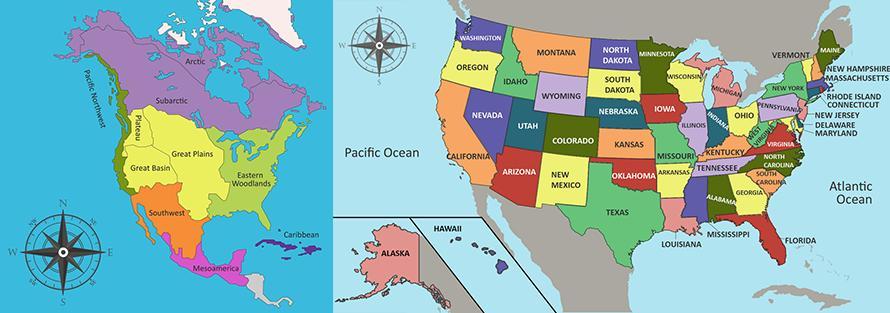
Answers
Answer:
The answer is New Mexico.
Explanation:
The first map shows the main Native American cultural regions in the United States, including the Southwest region. The second map specifically highlights the states that were part of the Southwest region, which includes Arizona, New Mexico, part of Utah, and part of Colorado.
The options are:
New Mexico - Correct. The map shows New Mexico as part of the Southwest region.
Florida - Incorrect. Florida is not shown as part of the Southwest region.
Ohio - Incorrect. Ohio is not shown as part of the Southwest region.
North Dakota - Incorrect. North Dakota is not shown as part of the Southwest region.
Therefore, based on the maps provided, New Mexico was located in the Southwest Native American cultural region.
HELP!!!!!!!!!!!!!!!!!!!!!!

Answers
Answer:
yeah what he said
Explanation:
Read the paragraph about the Tiananmen Square demonstrations that protested the unlimited government of China. Then answer the question that follows.
In June 1989, many people gathered at Tiananmen Square in Beijing, China, to fight for democratic rights. The government promptly shut down the protest by ordering military forces to attack the crowd. Many people lost their lives during this incident, while many others were injured.
Based on the excerpt, which two human rights did the Chinese government violate at Tiananmen Square?
right to free speech
right to form unions
right to peaceful demonstration
right to education
right to religious freedom
Answers
Answer:
right to speech
right to form unions
Explanation:
The Declaration of Human rights was adopted in 1948 and voted in favor by 48 countries within the United Nations, Including China.
- right to free speech create a protection for people to fully express their opinion and protesting the government as long as they did not violate the right of other people. This is protected under article 19 of the declaration of Human rights.
- The right to form unions provide people with legal protection to form groups that operate based on their own interest. This is protected under article 23 of the declaration of Human Rights.
Killing a group of protesters directly violated both of the rights above. This should expose Chinese government to potential sanctions from other members of the United Nations.
The headline below describes an action by citizens.
What conclusion can be drawn from the headline?

Answers
Answer: the the citizens rejected the state tax amendment
Explanation:
its on the paper-
The state tax amendment was denied by the populace