During metamorphosis, a tadpole's tail is reduced in size by the process of ______. A. regeneration B. apoptosis C. oxidative phosphorylation D. redifferentiation
Answers
The process of apoptosis, I believe, is when the tadpole's tail is reduced in size during metamorphosis.
In most animal phyla, metamorphosis actually takes place in conjunction with morphological, ecological, and physiological changes.
Marine invertebrates' larva behaves as a drifting tiny creature in the ocean, expanding its habitat distribution to find the best location for its survival.
When muscle cells undergo apoptosis, which is the final stage of their metamorphosis, they are split into membrane-bound muscle fragments and consumed by macrophages.
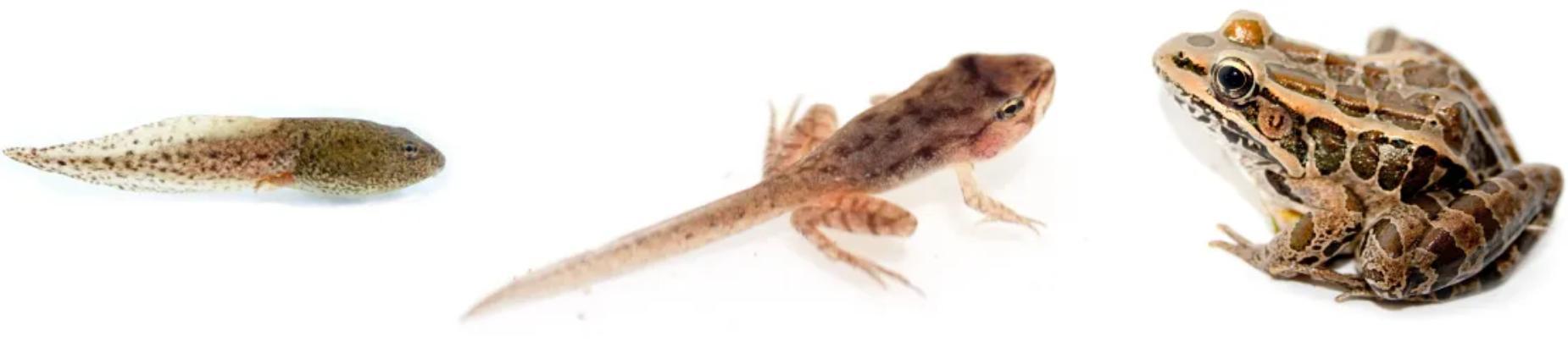
As a tadpole becomes a frog, apoptosis occurs. The cells in its tail are induced and it will be lost.
Image: Metamorphosis of a frog
Learn which protein is responsible for initiating apoptosis in the cytosol of the target cell: https://brainly.com/question/28275150
#SPJ4
Related Questions
c) Write equations to represent the two stages of photosynthesis
Answers
Answer:
6CO2 + 6H2O → C6H12O6 + 6O2
Explanation:
carbon dioxide + water ------> sugar + oxygen
P.S: on top of the arrow write "sunlight"
the positive tests you saw are similar to what happens to a person's blood when he or she receives a transmission of
Answers
When a person receives a blood transfusion, several things can happen to their blood: Restoration of Blood Volume, Replacement of Blood Components, Immune Response.
Restoration of Blood Volume: The transfused blood helps restore the blood volume in the recipient's body. This is particularly important in cases of significant blood loss or low blood volume due to various medical conditions.
Replacement of Blood Components: Transfused blood provides the recipient with additional red blood cells, platelets, plasma, and other blood components that may be deficient or depleted in their own blood. This helps improve the overall functioning of the blood and its ability to carry oxygen, clot properly, and support various physiological processes.
Immune Response: Sometimes, the recipient's immune system may recognize the transfused blood as foreign and mount an immune response against it. This can lead to complications such as transfusion reactions, where the immune system attacks the transfused blood cells, resulting in symptoms like fever, chills, shortness of breath, and in severe cases, organ damage.
It's important for blood transfusions to be carefully matched to the recipient's blood type and screened for compatibility to minimize the risk of immune reactions and other complications.
To know more about Immune Response
https://brainly.com/question/17438406
#SPJ11
This organelle uses light energy to make sugar from carbon dioxide and water are
Answers
Answer: Chloroplast
Explanation:
Plants and some algae have chloroplasts responsible for photosynthesis. Plants undergo photosynthesis to transform light energy into chemical energy. This energy is stored in the form of sugar to support their growth and provide energy. Chloroplasts have a double membrane, with the thylakoid membrane located within the inner membrane.
Photosynthesis occurs within the thylakoid membrane, which is folded into sacs called thylakoids. Chlorophyll, a green pigment, is present in the thylakoids and it absorbs light energy to split water molecules into hydrogen and oxygen. The oxygen is released into the atmosphere while the hydrogen is used to create ATP, a molecule that stores energy. ATP and hydrogen are then utilized to make sugar, the final product of photosynthesis.
To know more about chloroplast,
https://brainly.com/question/1741612
Chloroplast
Explanation:
Chloroplast is a green pigmented organelle which some eukaryotes (such as plants and algae) have in their cells and it is in charge of photosynthesis.
Select the correct answer.
What is the first thing you should look for on a food label?
OA. calories from fat
OB.
calories
OC. serving size
OD
number of servings
Answers
Answer:
The answer is C serving size.
Explanation:
Looking at the serving size may be the best idea. If you see the serving size for example: 9 pieces, and that's 190 calories. You may not even want to eat 9 pieces. That's a lot. So if you eat only 3 like me you only have 63 1/3 calories now.
The point is: there is no point looking at the calories if you aren't going to eat the serving size amount.
Hope this helps. :)
Protein, carbohydrate, and nucleic acid molecules are the result of smaller molecules bonded together. The process that occurs to attach these smaller molecules to one another is
Answers
Answer:
dehydration synthesis / condensation
Explanation:
This process removes water from the monomers so that they can bound together.
which characteristic demonstrates that mushrooms are living, reproducing organisms?
Answers
Mushrooms are living, reproducing organisms because they have the ability to grow and reproduce sexually or asexually.
Mushrooms belong to the kingdom Fungi and are considered living organisms because they possess characteristics that are commonly found in all living things. These characteristics include the ability to grow, obtain and use energy, respond to stimuli, and reproduce. In particular, the ability to grow and reproduce is what defines mushrooms as living organisms.
Mushrooms can grow by absorbing nutrients from their surrounding environment, such as soil, wood, or other organic matter. They can also reproduce sexually by producing spores called basidiospores, which grow into new individual mushrooms, or asexually by producing spores that develop into new mycelium (the vegetative part of the fungus).
To learn more about organisms, visit:
https://brainly.com/question/12825206#
#SPJ11
Will this process below ensure with certainty that the offspring will retain their needles? Explain your answer.
Chastagner emphasizes that homeowners can minimize needle shedding by keeping their displayed trees well-supplied with water. In fact, when he has set up trees for research in early December and kept them watered, some species, like noble and Nordmann fir, have gone even three months with only minimal shedding.
Answers
Answer:
I'm in school I'll help you when get home around 4:30
Use the theory of natural selection to explain changes seen in mating calls of the new isolated southern male frogs ?
Answers
The frogs in the isolated southern area had a distinctive mating call due to female choices and mating preferences.
How do female choices lead to changes in mating calls?When observing the frogs from the North and South, it was found that females pay special attention to the male mating calls.This includes call's duration, note rate and dominant frequency.Despite this these frogs can interbreed among each other.It is found that when the frogs from two different populations of the North and South established contact less than 8,000 years ago, the offspring from interbreeding were less viable. Therefore the females choose frogs from their own lineages to promote the health of their offspring.The southern females are pickier about their mates than the northern females such that they never mate with the northern males.Learn more about mating calls here:
https://brainly.com/question/13950617
#SPJ4
Over 500 million years ago what was British Columbia ??
Answers
Answer:
500-million-year-old fossil found in BC is ancient ancestor of spiders and scorpions. Palaeontologists in British Columbia have found a fossil of the oldest known ancestor of scorpions and spiders.
I’m looking for the answer q 1 and 2 please

Answers
Answer:
wfhhtsgbjjjhtddhhtdvnkkkkrwCbjyxcsrthxwry6nbxefvtynvggy

Describe one feature of artificial leg that cannot be copied by artificial leg. Give reason for your answer
Answers
One feature of a natural leg that cannot be fully replicated by an artificial leg is the ability to sense and feel various sensations, including touch, temperature, and pain. This is due to the complex network of sensory nerves and receptors present in a natural leg.
The human leg is equipped with a sophisticated sensory system that allows us to perceive and interpret various sensations. This sensory system includes specialized nerve endings, such as mechanoreceptors, thermoreceptors, and nociceptors, which provide feedback about touch, temperature, and pain, respectively.
While advancements in prosthetic technology have made significant strides in replicating the functional aspects of a natural leg, the ability to fully mimic the sensory capabilities of a biological limb remains a challenge. Although artificial legs can provide stability, mobility, and basic feedback through pressure sensors or microprocessors, they cannot match the intricacy and complexity of the natural sensory system.
The human sensory system is incredibly nuanced and allows us to experience subtle nuances in touch, detect temperature changes, and respond to potential threats or injuries through the sensation of pain. These sensory inputs are essential for balance, coordination, and proprioception, which are crucial for fluid and coordinated movement. Unfortunately, replicating such a complex sensory system in an artificial leg is currently beyond the scope of available technology.
In conclusion, while artificial legs can provide functional mobility, they cannot fully replicate the rich sensory experience and feedback provided by a natural leg. The complex network of sensory nerves and receptors present in the human leg enables us to perceive touch, temperature, and pain, which are challenging to fully replicate in an artificial limb.
Learn more about mechanoreceptors here:
https://brainly.com/question/17947146
#SPJ11
A microbiology student Gram-stained the yeast, S. cerevisiae, producing a sample with cells colored purple, pink, brown, and green. Explain why this organism produced results that deviate from typical purple or pink Gram-stained cells.
Answers
This organism produced results that deviate from typical purple or pink Gram-stained cells because the peptidoglycan variations in the cells are visible by gram staining. S. cerevisiae differs from other bacteria in that it lacks a lipid layer and is both gram-positive and gram-negative, giving the sample's cells colors of purple, pink, brown, and green.
Gram staining is a method frequently used to distinguish between two sizable groups of bacteria based on the distinct components of their cell walls.
By staining these cells red or violet, the Gram stain method distinguishes between Gram positive and Gram negative groupings.
The crystal violet used to stain the cells of gram-positive bacteria is retained by the presence of a thick layer of peptidoglycan in their cell walls.
A thinner peptidoglycan wall in Gram negative bacteria causes them to stain red instead because it does not hold the crystal violet throughout the decolorizing process.
Because the peptidoglycan differences in the cells can be seen by gram staining, this organism generated results that differ from the conventional purple or pink Gram-stained cells.
S. cerevisiae, which is both gram-positive and gram-negative and distinguishes itself from other bacteria by lacking a lipid coating, gives the sample's cells colors of purple, pink, brown, and green.
Learn more about Gram staining here https://brainly.com/question/13561218
#SPJ4
When comparing animal to plant cells, they are different in size, shape, and how they store energy. They have similarities, as well. Which organelles perform similar functions in both plant and animal cells. Group of answer choices D. Ribosome, cell membrane, chloroplast C. Cell membrane, cell wall, nucleus
Answers
Answer:
ribosome, cell membrane, nucleus
Explanation:
The organelles that perform similar functions in both plant and animal cells among the listed organelles would be the ribosome, the cell membrane, and the nucleus.
First of all, chloroplast and cell wall are limited to the plant cell only. Animal cells do not have these organelles.
The ribosome functions as the site of protein synthesis in both plant and animal cells. The cell membrane acts as a channel for the control of the movement of materials in and out of the cells and is found in both plant and animal cells. The nucleus is also present in both cells and serves as the control unit of the cell by housing the genetic materials and dictating how the cells will behave.
please helpppp
Drag the tiles to the correct boxes to complete the pairs.
What is the function of each lymph organ?
Answers
Explanation:
The main role of the lymphatic system is the transport of cells of the immune system during the activation of immunity, lipids in the form of lipoproteins, as well as the introduction into the systemic circulation of various objects (small and large molecules, liquids, infectious agents, etc.), packed in delivery vehicles - exosomes and vesicles
The main role of the lymphatic system is the transport of cells of the immune system during the activation of immunity, lipids in the form of lipoproteins.
What is lipoprotein?Particles called lipoproteins are comprised of protein and fat (lipids). They deliver cholesterol to your cells through your bloodstream.
High-density lipoprotein, or "good" cholesterol, and low-density lipoprotein, or "bad" cholesterol, are the two main categories of lipoproteins.
LDL comes in the form of lipoprotein. These lipoproteins transport cholesterol to the artery cells. High levels of LDL particles can cause cholesterol to accumulate in your arteries and create blockages known as plaques. The term "hardening of the arteries" or atherosclerosis refers to this condition.
Therefore, The main role of the lymphatic system is the transport of cells of the immune system during the activation of immunity, lipids in the form of lipoproteins.
To learn more about lipoproteins, refer to the link:
https://brainly.com/question/9041034
#SPJ5
What is the hierarchy
of living things
Answers
Answer:
Organelles, cells, tissues, organs, organ systems, organisms, populations, communities, ecosystems, and biosphere are the biological stages of organization of living things, organized from the simplest to the most complex.
Explanation:
Define Metabolism.. !
Answers
Answer:
Metabolisms are the chemical processes that occur within a living organism in order to maintain life
Explanation:
How do substances like CO2 and water move in and out of the cell ?Discuss.
Plz Answe It Guys
Answers
Answer:
It is by the process diffusion from the region of concentrated region to low concentrated one.concentration of carbon di-oxide and water is higher in external environment than that inside the cell, CO2and water moves inside the cell.
Explanation:
use a complete sentence to write a rule for how the bases are arranged in the
ladder model of DNA.
Answers
Answer:
With your group, use a complete sentence to write a rule for how the bases are arranged in the ladder model of DNA. ... The complementary base-pair rule states that adenine and thymine form pairs across two strands, and guanine and cytosine form pairs across two strands.
The rule for the arrangement of bases in the ladder model of DNA is that Adenine complementarily binds with Thymine by double bonds, while Guanine complementarily binds with Cytosine by triple bonds.
What do you understand by the Ladder model of DNA?The ladder model of DNA is a simplified representation of the actual structure and shape of a DNA molecule. It has an alternating chemical phosphate and sugar backbone, making the 'sides' of the ladder.
To make the first para more simple, we represent it as:
A=T; G≡C.
Therefore, the rule for the arrangement of bases in the ladder model of DNA is that Adenine complementarily binds with Thymine by double bonds, while Guanine complementarily binds with Cytosine by triple bonds.
To learn more about the ladder model of DNA, refer to the link:
https://brainly.com/question/820798
Which of the following is the best example of a neutral mutation?
A) A mutation that causes a rabbit that lives in the Arctic to have black fur
B) A mutation in a squirrel that causes it’s tail to not be as bushy and full
C) A mutation that caused a plants to develop a waxy coating which helps it retain water in its cells
D) A mutation in corn that causes it to not be able to produce chlorophyll and photosynthesize
Answers
Answer:
It's A.
Explanation:
11. explain the process of growth at the articular cartilage. what happens to the epiphyseal plate and the articular cartilage when bone growth ceases?
Answers
The growth at the articular cartilage involves the activity of the epiphyseal plate, which allows bones to grow in length. When bone growth ceases, the epiphyseal plate closes and is replaced by solid bone. The articular cartilage, on the other hand, remains unchanged and continues to provide cushioning and lubrication at the joint.
The growth at the articular cartilage is a process that occurs during bone development. The articular cartilage is the smooth, slippery tissue that covers the ends of bones where they meet to form a joint.
During growth, the epiphyseal plate, also known as the growth plate, plays a crucial role. The epiphyseal plate is a layer of cartilage located at the ends of long bones in children and adolescents. It allows bones to grow in length.
Here's how the process of growth at the articular cartilage occurs:
1. Chondrocytes, which are specialized cells found in the epiphyseal plate, divide and multiply.
2. As chondrocytes divide, they push the older cells towards the end of the bone.
3. The older chondrocytes in the epiphyseal plate undergo a process called hypertrophy, where they increase in size.
4. Minerals, such as calcium and phosphorus, are deposited in the hypertrophied cartilage.
5. Osteoblasts, which are bone-forming cells, replace the hypertrophied cartilage with bone tissue. This process is known as ossification.
When bone growth ceases, the epiphyseal plate closes and is replaced by solid bone. This usually happens during late adolescence or early adulthood. Once the epiphyseal plate closes, it becomes the epiphyseal line.
The articular cartilage continues to function throughout life as a protective cushion between bones at the joint. However, without bone growth, the articular cartilage does not undergo significant changes. It remains smooth and intact, providing lubrication and reducing friction during joint movements.
In summary, the growth at the articular cartilage involves the activity of the epiphyseal plate, which allows bones to grow in length. When bone growth ceases, the epiphyseal plate closes and is replaced by solid bone. The articular cartilage, on the other hand, remains unchanged and continues to provide cushioning and lubrication at the joint.
To know more about articular cartilage visit:
https://brainly.com/question/33444196
#SPJ11
The long black hair of a cat is part of its
Answers
Answer:
Phenotype.
..................
Answer:
phenotype
Explanation:
phenotype is the set of observable characteristics of an individual resulting from the interaction of its genotype with the environment.
genotype is the genetic constitution of an individual organism.
Hope this helps
Cell division is an essential stage, and eventual result, of every organic cell cycle. What are the different types of cell division? How do they differ from each other?
Answers
mitosis is the cell division that results in two daughter cells each having the same number and kind of chromosomes as the parent nucleus.
meiosis is the process where a single cell divides twice to produce four cells containing half the original amount of genetic information.
An athlete is running a race. The athlete’s body needs energy. Which type of organelle in the athlete’s cells supplies the energy for cellular function?.
Answers
An athlete is running a race. The athlete’s body needs energy. Mitochondria in the athlete’s cells supplies the energy for cellular function.
Mitochondria- The majority of the chemical energy required to drive a cell's metabolic operations is produced by mitochondria, that are membrane-bound cell organelles. Adenosine triphosphate (ATP), a tiny molecule, serves as a storage container for the chemical energy generated by the mitochondria (ATP).
ATP- A vital "energy molecule" present in all living things is adenosine 5′-triphosphate, also known as ATP and typically written without the 5′-. In particular, it is a coenzyme which transfers energy to the cells by releasing the phosphate groups when it interacts with enzymes like ATP triphosphatase.
To know more about the Mitochondria, click on the below link,
https://brainly.com/question/15159664
#SPJ1
Question 53
In recent years, the largest number of rabies cases were associated with
a. skunks
b. bats
c. dogs
d. raccoons
Answers
In recent years, the largest number of rabies cases in the United States have been associated with bats. Therefore, option b. bats is the correct answer.
Rabies is a viral disease that affects the nervous system of humans and other mammals. In recent years, bats have been the largest source of rabies cases in the United States, with other common carriers including raccoons, skunks, and foxes. The disease is typically spread through the bite of an infected animal, and symptoms may not appear for several weeks or months. Rabies is a serious disease that can be fatal, but it can be prevented through vaccination and prompt medical treatment following exposure. It is important to take precautions to prevent exposure to rabies, such as avoiding contact with wild animals, vaccinating pets, and seeking medical attention if bitten by an animal.
Learn more about rabies here:
https://brainly.com/question/9547600
#SPJ11
Does this look right??

Answers
Answer:
I have no hecking clue
but im gonna have to say yes
Explanation:
Explanation- it looks correct
Chemical reactions are essential to the life of a living organism.
Make a list of biological processes
that involve chemical reaction
Answers
Common examples of biological processes that involves chemical reactions are as follows:
PhotosynthesisCellular respirationWhat is a chemical reaction?A chemical reaction is typically a process that involves the breaking or making of interatomic bonds, in which one or more substances called reactants are changed into other substances called products.
Chemical reactions, as mentioned in this question, are essential to life, hence, cannot be overemphasized.
Specific chemical reactions that take place inside living organisms are termed biochemical reactions.
Some common examples of biological processes that involves chemical reactions are as follows:
Photosynthesis; which is the process whereby green plants manufacture their own food using light energy. Cellular respiration; which is the process whereby energy is synthesized as a result of the breakdown of organic substances.Learn more about chemical reaction at:https://brainly.com/question/22817140
#SPJ1
if you are given a piece of dna that is 800 basepairs long and asked to perform 25 cycles of pcr. how many basepairs of dna will you have at the end of your pcr?
Answers
Assuming that the PCR process is successful and efficient, the amount of DNA would increase exponentially, approximately doubling with each cycle.
Therefore, after 25 cycles of PCR, the amount of DNA would be approximately 2^25 times greater than the original amount.
To calculate the final number of base pairs, we can use the fact that each original molecule of DNA is doubled during each cycle. Thus, after 25 cycles, the original 800 base pairs of DNA would have been doubled 25 times:
2^25 x 800 base pairs = 33,554,43200 base pairs
Therefore, at the end of 25 cycles of PCR, there would be approximately 33.5 billion base pairs of DNA.
To learn more about DNA here:
https://brainly.com/question/264225
#SPJ11
Find the function rule for the input-output table.
Answers
Test the function rule by plugging in some values for the input and checking if the output matches the value in the input-output table. If the output values match, then the function rule is correct.
To find the function rule for an input-output table, first, look for any patterns or relationships between the input values and the output values. One way to do this is to calculate the difference between each set of consecutive output values and compare them to the difference between the corresponding input values. If the differences are constant, then the function is likely linear.
Next, use the pattern or relationship found to write an equation for the function rule. The equation should include the independent variable (the input) and the dependent variable (the output), and any necessary constants or coefficients.
Learn more about the function rule, below:
https://brainly.com/question/9774060
#SPJ11
Part 3. Which of the following arguments are invalid and which are valid? Prove your answer by replacing each proposition with a variable to obtain the form of the argument. Then prove that the form is valid or invalid. (12) The patient has high blood pressure or diabetes or both. The patient has diabetes or high cholesterol or both. ∴ The patient has high blood pressure or high cholesterol.
Answers
The statements mentioned are invalid and have no argumentive point.
Let A = "the patient has high blood pressure", B = "the patient has diabetes", and C = "the patient has high cholesterol". Then the argument can be rewritten as:
A ∨ B
B ∨ C
∴ ∨ C
This argument is invalid. An example is given below to understand in a clear way:
Suppose A is true (the patient has high blood pressure) and B and C are both false (the patient does not have diabetes or high cholesterol). Then both premises are true, but the conclusion is false.
Therefore, the argument is invalid.
Learn more about Cholesterol here:
https://brainly.com/question/32562117
#SPJ4
Which of the following are viruses unable to infect?
Answers
Answer:
non living things
Hope this helps :) !!!