Balance the following reaction CS2+Cl2. CCl4+S2Cl2
Answers
Answer:
CS₂ + 3Cl₂ ⇒ CCl₄ + S₂Cl₂
Explanation:
This one is relatively simple. When we take inventory of both sides, we see 1 Carbon, 2 Sulfurs, and 2 Chlorines on the reactant side, and 1 Carbon, 2 Sulfurs, and 6 Chlorines on the product side. Since we have Cl₂ on the left and we want 6 on the left, let's add a coefficient of 3 to Cl₂. This balances everything out! Final answer: CS₂ + 3Cl₂ ⇒ CCl₄ + S₂Cl₂. Hope this helps!
Related Questions
HELPP "Can you seperate a mixture using solubility tests, if so, explain how."
Answers
Answer:
yes you can by using filtration and evaporation
Answer:
You can by using evaporation and filtration methods.
Explanation:
I hope this helps! Have a great rest of your day!
Is there a relationship between CO2 levels rising and heavy precipitation? If so, what is it?
Answers
Answer:
Explanation:
Yes, there is a relationship between rising CO2 levels and heavy precipitation. As the concentration of CO2 in the atmosphere increases, it leads to a warming of the Earth's surface due to the greenhouse effect. This warming, in turn, causes an increase in the rate of evaporation of water from the Earth's surface, including from the oceans, lakes, and rivers.
This increased evaporation results in more water vapor in the atmosphere, which can lead to heavier precipitation events, including more frequent and intense rainstorms, snowstorms, and other forms of precipitation. This is because warmer air can hold more moisture, making it more likely to produce heavy rainfall.
In addition, the warming of the Earth's surface can also lead to changes in atmospheric circulation patterns, which can further increase the likelihood of heavy precipitation events in some regions.
Overall, the relationship between rising CO2 levels and heavy precipitation is complex and can vary depending on the specific location and other environmental factors. However, there is evidence to suggest that as global temperatures continue to rise due to rising CO2 levels, heavy precipitation events are likely to become more frequent and intense in many parts of the world.
Answer: Yes there is a direct relationship between CO2 and heavy precipitation. Rising in CO2 means increasing the temperature in the atmosphere which causes more water vapor evaporates into the atmosphere and which causes high rainfall or precipitation.
Explanation: Increased atmospheric CO2 levels are causing plant stomata to close, allowing plants to hold more water in their stems, reducing transpiration, and possibly impacting tropical rainfall patterns in varying ways depending on region.
Is there only one way to conduct a scientific experiment? Explain why or why not.
Answers
Answer:
no
Explanation:
because to conduct an experiment you would have to go through the process more than once to compare them to find the best soulution or get the best results
There are multiple types of experiments, one of the few things that they have in common is that they all provide the scientist with data. For a specific experiment, or question, the most reliable answer is one that has been tested multiple times. Meaning that a test needs to be conducted more than 2 times to be completely finished.
What are the products of photosynthesis?
water and oxygen
glucose and oxygen
oxygen and water
carbon dioxide and water
Answers
Answer:
oxygen and glucose.
Explanation:
i just know
Which part is pointing to the gel-like liquid that holds the organelles, and which is the site of much of the cell's metabolism?
Select one:
4
2
1
6
8
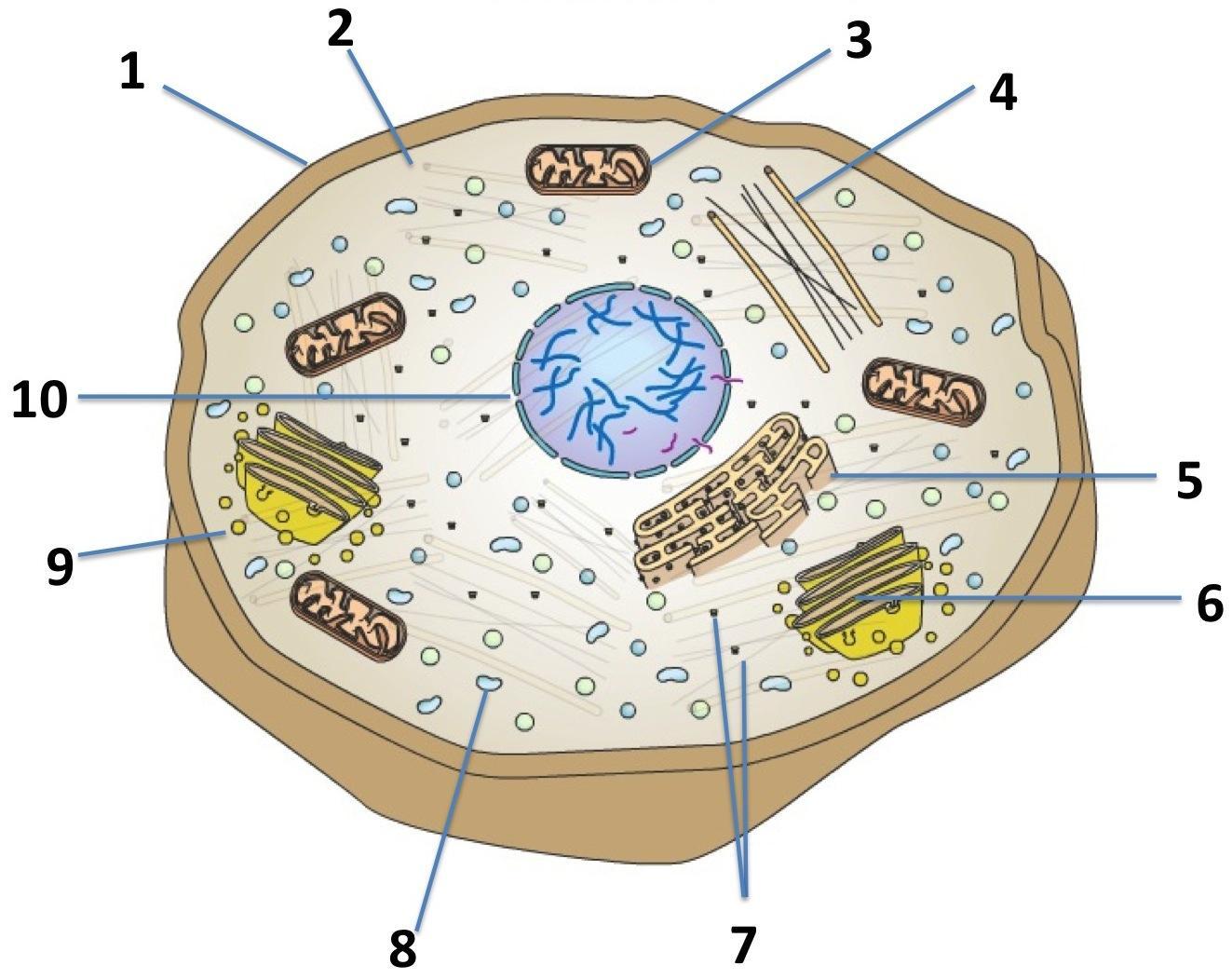
Answers
Answer: hope this helps ♡
2 and 3
Explanation:
The gel-like liquid that holds the organelles is called the cytoplasm. (2)
The site of much of the cell's metabolism is called the mitochondria. (3)
Identify all the correct examples of weather
Answers
Answer:
Here are some correct examples of weather:
Sunny and warm weatherRainy and humid weatherFoggy and cool weatherSnowy and cold weatherWindy and stormy weatherHazy and hot weatherThunderstorms and lightningHurricanes and tornadoesClear and crisp weatherOvercast and dreary weather.
Explanation:
espero te ayude
Use the picture below to answer the question.
Comparing the two waves, wave B has a...
A) higher frequency.
B) greater amplitude.
C) shorter wavelength.
D) longer wavelength.

Answers
Answer: D) longer wavelength.
Explanation:
As far as I know, you calculate frequency on a graph using the number of peaks you can see. Since the wavelength is shorter (the distance between two peaks on the wave), the frequency should also be higher as more fit on the graph.
What differences in air masses can cause wind? Explain why this happens.
Answers
Which of the following statements fully describes what an object may do when it experiences unbalanced forces? Select the two best answers.
A. It may change directions.
B. It will move at a constant speed.
C. It may slow down.
D. It may slow down or speed up.
E. It will stay stationary.
Answers
Answer:b
Explanation:
Match each letter with the correct label. Use the atom diagram below.
Electron - Nucleus - Proton - Neutron

Answers
C= protons
B= neutron
A= electron
Answer:
Explanation: First and foremost, we must carefully examine the provided diagram in order to properly name the sections of an atom diagram.
Step-by-step instructions are given along with the answers in sequential sequence.
Correct answer for (A) is Electron since they are present at the outermost shell of an atom.The correct answer for (B) is Neutron since it is the central element of an atom.The proton is the right answer for (C), as it is included in the nucleus grouping with the neutron.The nucleus is the correct option for (D) since it is the primary component of the atom and includes both protons and neutrons.Learn more about the Atom here:
https://brainly.com/question/12578802
anybody know where to find this packet at online ?

Answers
What is NOT true about genes and chromosomes?
Genese are located on chromosomes
Chromosomes are in the nucleus
A single chromosome can contain hundreds of genes
All of these are true
Answers
Let us go option by option :
1) Genes are located in chromosomes. TRUE
Chromosomes are in cell nucleus. A chromosome contains hundreds and thousands of genes. A normal have 23 pairs of chromosomes, and a total of 46.
2) Chromosomes are the in nucleus.
TRUE
Chromosome is structure found in nucleus of the cell. It is made up of protein and DNA.
3) A single Chromosome can contain hundreds of genes.
TRUE
single Chromosome can contain hundreds of tgenes.
4) All of the above
TRUE
As all the statements above are true. The correct option is 4.
Answer:
all of them are true
Explanation:
this is because chromosomes contain genetic materials and it is present in the nucleus.
Therefore, the correct option is 4) all of these are true
no problem
Students find an exposed layer of shale. Describe the ancient environment that might have once existed to create this rock layer.
please help! :(
Answers
Which of these statements best describes which traits are expressed by an organism? A. An organism expresses all the traits for which it carries genes.
B. An organism expresses only the traits whose genes are inherited from a parent.
C. An organism expresses only the traits whose genes it will pass on to its offspring.
D. An organism expresses some traits for which it carries genes while others are dominant
Answers
The statement that best describes which traits are expressed by an organism is A.
An organism expresses all the traits for which it carries genes. This is because an organism's traits are determined by the combination of genes it carries, which includes both dominant and recessive genes. Even if a trait is not expressed in an organism, it can still be carried in its genes and passed on to its offspring. Therefore, all the traits for which an organism carries genes have the potential to be expressed in either the organism or its offspring.
B-An organism expresses only the traits whose genes are inherited from a parent.
what is the the chemical name for hydroden and oxygen
Answers
Answer:
hydrogen peroxide is a chemical name for hydrogen and oxygen
What does the word centripetal mean
a.
center seeking
b.
continuous
c.
gravitational
d.
free falling
Answers
How would you measure 20 grams of salt? Describe how you did this.
(this is due by tmr so someone please help!)
Answers
Answer:
I would just find a measuring cup and do it that way it's the easiest way
How can temperature lead to weathering of rocks? (1 point)How can temperature lead to weathering of rocks? (1 point)
a. Rocks become ice when they get cold, which can later melt and wash away.
b. Rocks can melt when they become hot, which can lead to pieces breaking off.
c. Rocks expand and contract when they are heated and cooled which cause them to break.
d. Rocks move faster when they are heated, which can cause the pieces to eventually
Which part of Earth experiences physical weathering? (1 point)
a crust
b inner core
c mantle
d outer core
Which is the last stage of physical weathering in rocks? (1 point)
a boulder
b pebble
c sand
d rock
What must be present on a rock that undergoes frost wedging?(1 point)
a sharp edges
b round shape
c holes around it
d crack
Answers
Rocks expand and contract when they are heated and cooled which cause them to break. Physical weathering is experienced to the crust of earth. The last state of physical weathering is sand. Rocks that have some cracks are undergoing frost wedging.
What is weathering?Weathering is a geographical process of deterioration of rocks and minerals into parts and eventually into dust and sand. Thermal stress, a phenomenon caused by temperature variations, can also contribute to mechanical weathering.
The expansion and contraction of rock is influenced by temperature changes. The rock's structure deteriorates as this occurs repeatedly. Physical weathering and mechanical weathering disintegrates rocks without any chemical changes and it happens to the earth's crust.
Erosion of rocks eventually results in formation of sand. Frost wedging is a process by which ice erodes the rocks having cracks. It is also called ice wedging.
To find more on rock weathering, refer here:
https://brainly.com/question/28755105
#SPJ2
Answer: How can temperature lead to weathering of rocks= Rocks expand and contract when they are heated and cooled which cause them to break.
Which part of Earth experiences physical weathering= crust
Which is the last stage of physical weathering in rocks= sand
What must be present on a rock that undergoes frost wedging= a crack
Explanation: I took the test
Which property do we observe when we watch kids blowing bubbles? a density b color c solubility d flammability
Answers
Answer:
its a
Explanation:
We observe when we watch kids blowing bubbles it is a property of density. Therefore, option A is correct.
What is density ?The mass of a material per unit of volume is its density. Density is most frequently represented by the symbol, however Latin letter D may also be used. Mass divided by volume.
A liquid's density is a gauge of how heavy it is relative to the amount being measured. The liquid that weighs heavier is more dense if you weigh two liquids with similar volumes or quantities. A liquid that is less dense than water will float if it is gradually introduced to the water's surface.
By dividing a material's mass by its volume, the density of a substance may be estimated. The most common units for density are grams per milliliter, or g/mL, which is equivalent to grams per cubic centimeter.
Thus, option A is correct.
To learn more about density follow the link below;
https://brainly.com/question/6107689
#SPJ3
1. Using D10W and a vial of NaCl 4 mEq/mL, how many mL of NaCl are needed to prepare 250 mL of a
D10/NS solution?
a. 4.8mL
b. 9.6ml
c. 19.6mL
d. 154mL
Answers
To prepare 250 mL of a D10/NS solution using D10W and a vial of NaCl 4 mEq/mL, you would need 9.6 mL of NaCl. Normal saline (NS) contains 154 mEq/L of sodium chloride (NaCl). To prepare 250 mL of NS, you would need 250 mL * (154 mEq/L) = 38500 mEq of NaCl. Since the vial of NaCl contains 4 mEq/mL, you would need 38500 mEq / (4 mEq/mL) = 9625 mL = 9.6 mL of NaCl. So the correct answer is b. 9.6ml.
HURRY PLEASE In Maglev trains, fields exist between objects that are not in contact but can interact at a distance.
True
Or
False
Answers
In Maglev trains, magnetic force exist between objects that are not in contact but can interact at a distance.Hence, the statement is true.
What is a force?Force is defined as a cause which is capable of changing the motion of an object. It can cause an object which has mass to change it's velocity. It is also simply a push or a pull . It has both magnitude as well as direction.Hence, it is a vector quantity.
It has SI units of Newton and is represented by'F'.Newton's second law states that force which acts on an object is equal to momentum which changes with time. If mass of object is constant, acceleration is directly proportional to net force acting on an object.
The concepts which related to force are thrust and torque .Thrust increases the velocity of an object and torque produces change in rotational speed of an object.
Learn more about force,here:
https://brainly.com/question/26115859
#SPJ6
In your own words, explain the difference between how a ‘dam system’ transforms hydropower into electrical energy compared with how a ‘run-of-the-river system.
Answers
When the speed of the bottle is 2 m/s, the KE is kg m2/s2. When the speed of the bottle is 3 m/s, the KE is kg m2/s2. When the speed of the bottle is 4 m/s, the KE is kg m2/s2. When the speed of the bottle is 5 m/s, the KE is kg m2/s2. When the speed of the bottle is 6 m/s, the KE is kg m2/s2.
instructions
In this part of the experiment, you will be changing the speed of the bottle by dropping it from different heights. You will use the same mass, 0.250 kg, for each trial, so record this mass in Table B for each velocity. Then, calculate the expected kinetic energy (KE) at each velocity. Use the formula KE = mv2,
where m is the mass and v is the speed. Record your calculations in Table B of your Student Guide.
Answers
Answer:
Based on the given instructions, you need to calculate the expected kinetic energy (KE) at each velocity using the formula KE = mv^2, where m is the mass and v is the speed. The mass is given as 0.250 kg.
Table B: Calculation of Kinetic Energy (KE)
Table B: Calculation of Kinetic Energy (KE)
Speed (m/s)Mass (kg)KE (kg m^2/s^2)20.2500.50030.2500.75040.2501.00050.2501.25060.2501.500
To calculate the kinetic energy at each velocity, multiply the mass (0.250 kg) by the square of the velocity.
For example, when the speed of the bottle is 2 m/s: KE = (0.250 kg) * (2 m/s)^2 = 0.250 kg * 4 m^2/s^2 = 1.000 kg m^2/s^2
Perform similar calculations for the other velocities and record the results in Table B.
Answer:
Explanation:mass of the bottle in each case is M = 0.250 kg
now as per given speeds we can use the formula of kinetic energy to find it
1) when speed is 2 m/s
kinetic energy is given as
2) when speed is 3 m/s
kinetic energy is given as
3) when speed is 4 m/s
kinetic energy is given as
4) when speed is 5 m/s
kinetic energy is given as
5) when speed is 6 m/s
kinetic energy is given as
How do you make an atom model? PLEASE HELP ANY IDEAS GUYS?
Answers
Answer:
If you are looking for like a drawing say less.

Which of the units below could be used to measure time? Check all that apply.
Minutes (min)
Meters per second (m/s)
Miles (mi)
Hours (hr)
Boxes per minute (boxes/min)
Kilometers (km)
Second (s)
Miles per hour (mph)
Feet (ft)
Answers
i dont get it, i need help

Answers
Answer:
Substance 2 and 5
Explanation:
the number at the end of each letter represents how much there is of it
fo example h3 means there is 3 hydrogens and c means there is 1 carbon atom
Answer:
I think it's subtance 2 & 5
Explanation:
Sand and gravel in a mixture have the same properties as sand and gravel when they are not mixed.
Since gravel is bigger than sand,
A.
the sand and gravel can never be separated.
B.
the sand and gravel can be separated with a sieve.
C.
the mixed sand and gravel will stick together.
D.
the mixed sand and gravel have a lower volume.
Answers
Answer:
b
Explanation:
There are two types of mixture, one is homogeneous mixture and other is heterogeneous mixture. Therefore, the correct option is option B that is the sand and gravel can be separated with a sieve.
What is mixture?When two or more compounds are combined but each ingredient retains its chemical identity, the result is referred to as a mixture. In other words, there is no chemical interaction between the parts of a combination. According to how consistent they are and how well the components' particle sizes match up, mixtures are categorized.
Sand and gravel in a mixture have the same properties as sand and gravel when they are not mixed. Since gravel is bigger than sand, the sand and gravel can be separated with a sieve.
Therefore, the correct option is option B.
To know more about mixture, here:
https://brainly.com/question/12160179
#SPJ2
What is the charge on the Cr in Cr2O72-
Answers
Answer:
+6.
Explanation:
So, a chromium atom here has an oxidation number of +6.
hi can someone help please

Answers
Answer:
cm3
Explanation:
the cm3 is a measurement of height/length and not volume
kg, mL, L are all volume measurements. i hope this helps
Kachow
It's due in 9 mins.. who ever waste my coins will get reported
What happens to air when it is heated by the sun?
water vapor changes to liquid
it rains
it descends
it rises
Answers
Answer:
D. It rises
Explanation:
Heat energy is released when the sun comes in to contact with the air. It then gets pushed into the atmosphere which creates a bubble of air that is warmer, causing that bubble to rise.