350. mL of a sodium chloride solution with a concentration of .225 mol/L is diluted with 550 ml Potassium chloride solution with a concentration of .125 mol/k What is the concentration of chloride in the mixed solution
Answers
To find the concentration of chloride in the mixed solution, we need to consider the amount of chloride ions contributed by both sodium chloride (NaCl) and potassium chloride (KCl).
Let's calculate the moles of chloride ions contributed by each solution:
For the sodium chloride solution:
Volume (V1) = 350 mL
Concentration (C1) = 0.225 mol/L
Number of moles (n1) = Volume (V1) * Concentration (C1)
= 0.350 L * 0.225 mol/L
= 0.07875 mol
For the potassium chloride solution:
Volume (V2) = 550 mL
Concentration (C2) = 0.125 mol/L
Number of moles (n2) = Volume (V2) * Concentration (C2)
= 0.550 L * 0.125 mol/L
= 0.06875 mol
Now, let's find the total moles of chloride ions in the mixed solution by adding the moles contributed by both solutions:
Total moles of chloride ions = n1 + n2
= 0.07875 mol + 0.06875 mol
= 0.1475 mol
To find the concentration of chloride in the mixed solution, we need to divide the total moles of chloride ions by the total volume of the mixed solution:
Total volume of the mixed solution = Volume of NaCl solution + Volume of KCl solution
= 350 mL + 550 mL
= 900 mL
= 0.900 L
Concentration of chloride = Total moles of chloride ions / Total volume of the mixed solution
= 0.1475 mol / 0.900 L
= 0.1639 mol/L
Therefore, the concentration of chloride in the mixed solution is approximately 0.1639 mol/L.
Learn more about concentration Visit : brainly.com/question/17206790
#SPJ11
Related Questions
Indicate if you would increase or decrease the volume of the container to increase Ihe yield of the products in each of the following: Drag the appropriate items to their respective bins_ Reset Help PCIs(g) = PCls(g) + Clz(g) 2NOCLz (g) 2NO(B) - 2C1(g3 2Hz (g) 02(g) 2HzO(g)
Answers
If we label the reactions 1 - 3 in order as they appear in the image attached.
Reaction 1 - The yield is increased by decreasing the volume
Reaction 2 - The yield is increased by decreasing the volume
Reaction 3 - The yield is increased by increasing the volume
How would the yield of the products increase?We know that when a constraint is imposed on a reaction system that is in equilibrium, it is usual that the equilibrium position of the system would shift. The reason why the equilibrium position would shift is so that the constraint that is on the system can be annulled and then a new position of equilibrium would become established.
We would now look at the reactions. We know that when we increase the volume of the reaction, the equilibrium position would shift to the direction in which the volume is lesser. Similarly, if the volume is decreased, the direction to which the equilibrium position would shift would be that of a higher volume.
Learn more about equilibrium position:https://brainly.com/question/29409724
#SPJ1

What is a trial?(1 point)
Responses
one of a series of tests
one of a series of tests
an item used in a test
an item used in a test
a plan to test an idea
a plan to test an idea
the result of a series of tests
Answers
A trial refers to a plan to test an idea. A trial is a test, a plan to test an idea, or one of a series of tests that are designed to determine whether a hypothesis or a theory can be verified or disapproved in the field of science.
Trials are conducted to assess the effectiveness of new medications or to identify the underlying cause of a disease, among other things. A hypothesis is developed in which the scientist predicts the outcome of the trial before it is conducted. The null hypothesis, which assumes that there is no significant difference between the control and test groups, is another hypothesis. After the trial has been conducted, the outcomes are evaluated, and the hypothesis is either confirmed or refuted based on the findings. Trials are critical in determining the effectiveness of new treatments and interventions for human illnesses and ailments. They are the primary technique used to determine if new medicines or therapies are effective, and they can assist in establishing the scientific basis for a specific medicine or therapy.
For more such questions on hypothesis, click on:
https://brainly.com/question/12416923
#SPJ11
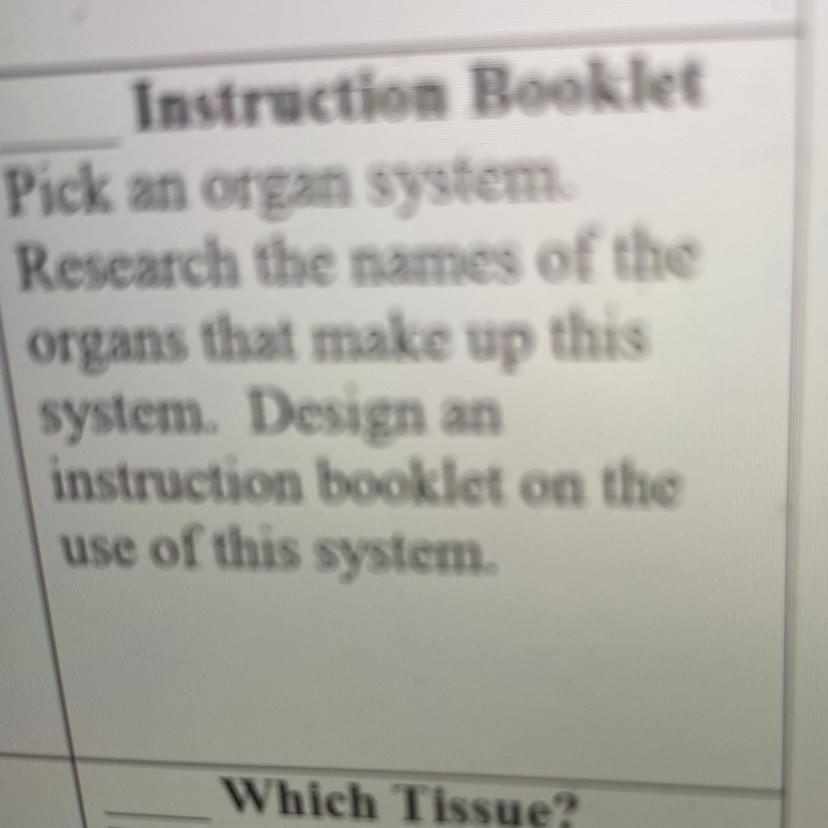
Help with this instruction booklet
Answers
what element can be found in both plays and stories
Answers
The element that can be found in both plays and stories is "characters."
Characters are an essential element of both plays and stories. They are the individuals or entities that drive the narrative, interact with each other, and contribute to the development of the plot. In plays, characters are typically portrayed by actors who perform their roles on stage, while in stories, characters are described and depicted through written words.
Characters can be central or supporting figures in a play or story, and they play a vital role in engaging the audience or readers. They have distinct personalities, motivations, and relationships that influence the events and conflicts within the narrative. Through their actions, dialogue, and character development, they contribute to the overall themes and messages conveyed by the play or story.
Whether it is a theatrical production or a written narrative, the presence and portrayal of characters are fundamental to creating engaging and compelling plays and stories.
Thus, the element that can be found in both plays and stories is "characters."
Learn more about plays and stories https://brainly.com/question/25525787
#SPJ11
What happens when the pressure of gas is lowered
Answers
Answer:
its volume will increase
Determine the volume of water to be added to the nitric acid solution at a concentration of 8.61 mol / L to prepare 500 mL of the bulk concentration solution at 1.75 mol / L
Answers
Answer:
398 mL
Explanation:
Using the equation for molarity,
C₁V₁ = C₂V₂ where C₁ = concentration before adding water = 8.61 mol/L and V₁ = volume before adding water, C₂ = concentration after adding water = 1.75 mol/L and V₂ = volume after adding water = 500 mL = 0.5 L
V₂ = V₁ + V' where V' = volume of water added.
So, From C₁V₁ = C₂V₂
V₁ = C₂V₂/C₁
= 1.75 mol/L × 0.5 L ÷ 8.61 mol/L
= 0.875 mol/8.61 mol/L
= 0.102 L
So, V₂ = V₁ + V'
0.5 L = 0.102 L + V'
V' = 0.5 L - 0.102 L
= 0.398 L
= 398 mL
So, we need to add 398 mL of water to the nitric solution.
What measurements should you use for large amounts of energy transfer
Answers
What is the chemical reaction that occurs for the complete combustion of natural gas.
Answers
can someone help me?

Answers
Answer:
Explanation:
c
calculate the root-mean-square speed of ne atoms at the temperature at which their average kinetic energy is 5.90 kj/mol.
Answers
The root-mean-square speed of Ne atoms at the temperature where their average kinetic energy is 5.90 kJ/mol is about 461 m/s.
The following equation describes the root-mean-square (rms) speed of gas molecules: v = sqrt((3kT)/m).
where m is the molar mass of the gas in kilogrammes per mole, v is the rms speed, k is the Boltzmann constant (1.38 x 10⁻²³ J/K), T is the temperature in Kelvin, and k is the Boltzmann constant.
We must first change the supplied kinetic energy from joules per mole to joules per atom in order to compute the rms speed of Ne atoms:
6.02 x 10²³ atoms/mol / 5.90 kJ/mol = 9.80 x 10⁻²¹ J/atom
The equation for rms speed is now: v = sqrt((3kT)/m).
The molar mass of Ne is 20.18 g/mol, which is equivalent to 20.18/1000 = 0.02018 kg/mol. To get the mass of one Ne atom, we divide by Avogadro's number:
0.02018 kg/mol / 6.02 x 10^23 atoms/mol = 3.35 x 10^-26 kg/atom
Now we can substitute the given temperature and Ne atom mass into the formula for rms speed:
v = sqrt((3kT)/m) = sqrt((3 x 1.38 x 10^-23 J/K x 298 K) / 3.35 x 10^-26 kg)
v ≈ 461 m/s
Therefore, the root-mean-square speed of Ne atoms at the temperature at which their average kinetic energy is 5.90 kJ/mol is approximately 461 m/s.
Ne has a molecular mass of 20.18 g/mol, or 20.18/1000 = 0.02018 kg/mol.
One Ne atom's mass is obtained by dividing by Avogadro's number:
3.35 x 10⁻²⁶ kg/atom = 0.02018 kg/mol / 6.02 x 10²³ atoms/mol
The formula for rms speed can now be modified to include the specified temperature and mass of the Ne atom:
The formula for v is sqrt((3kT)/m) = sqrt((3 x 1.38 x 1023 J/K x 298 K) / 3.35 x 1026 kg).
v ≈ 461 m/s
The average kinetic energy of Ne atoms is 5.90 kJ/mol, hence their root-mean-square speed at that temperature is roughly 461 m/s.
For such more questions on Kinetic energy
https://brainly.com/question/25959744
#SPJ4
In the Haber Process, ammonia is synthesized from nitrogen andhydrogen:
N2 (g) + 3H2 -----> 2NH3(g)
ΔG at 298K for this reaction is -33.3 kj/mol. the valuef ΔG at 298 K for a reaction mixture that consists of 1.9 atmN2, 1.6 atm H2 and 0.65 atm NH3 is________.
a.) -3.86 x 10³
b.) -1.8
c.) -7.25 x 10³
d.) -40.5
e.) -104.5
Answers
The value of ΔG at 298 K for a reaction mixture containing 1.9 atm N2, 1.6 atm H2, and 0.65 atm, the answer is (a) -3.86 × 10^3.
NH3 can be calculated using the equation:
ΔG = ΔG° + RT ln(Q)
where ΔG is the standard Gibbs free energy change, ΔG° is the standard Gibbs free energy change at standard conditions, R is the gas constant, T is the temperature in Kelvin, and Q is the reaction quotient.
In this case, we are given ΔG° as -33.3 kJ/mol. To calculate Q, we need to use the partial pressures of the gases in the reaction mixture. The reaction stoichiometry tells us that the ratio of the partial pressures of N2, H2, and NH3 is 1:3:2. Therefore, we can write:
Q = (P(NH3))^2 / (P(N2) * P(H2)^3)
Plugging in the given values of P(N2) = 1.9 atm, P(H2) = 1.6 atm, and P(NH3) = 0.65 atm, we can calculate Q. Then, using the value of R = 8.314 J/(mol·K) and the temperature T = 298 K, we can substitute these values into the equation and solve for ΔG.
The calculated value of ΔG at 298 K for the given reaction mixture is approximately -3.86 × 10^3 J/mol. This value is equivalent to -3.86 kJ/mol. Therefore, the answer is (a) -3.86 × 10^3.
To learn more about Haber Process here brainly.com/question/30928282
#SPJ11
how is a convection current created.
Answers
Answer:
it is created by movement of molecules with higher energy upwards and the movement of molecules with lower energy downwards
Explanation:
please rate brainliest if I deserve
What are the coefficients that would correctly balance this equation? ____Zn + ____K₂CrO₄→ ____K + ____ZnCrO₄
Answers
Answer:
Zn + K2CrO4 -----> 2K + ZnCrO4
Explanation:
You are given a piece of paper and a match. The paper has a mass of 2.5 g. You then light the match and light the piece of paper on fire. After it burns, the remaining bits of paper weigh 0.5 g. Does this demonstration violate the conservation of mass? Explain why or why not?
Answers
Answer:
No
Explanation:
No. The demonstration does not violate the conservation of mass.
The law of conservation of mass states that mass can neither be created nor destroyed in a reaction. However, mass can be converted from one form to another during the reaction.
In this case, even though the remaining bits of paper weigh 0.5 g while the original paper weighed 2.5 g, the ashes and smoke/gas from the burning will all add up to the lost weight of the paper.
The burned part has been converted into other forms. If the smoke/gas and the ashes are properly captured, they will mark up with the weight of the remaining paper to give the weight of the original paper.
The answer to the question on whether the burning violates the law of conservation of mass, we say that;
No, the demonstration does not violate the conservation of mass because the mass formed still adds up to the original mass.
The law of conservation of mass states that mass in an isolated system, matter can neither be created nor destroyed by chemical reactions or physical transformations. However, it could involve change in mass from one form to another.
Now, we are told that the remaining bits of paper has a mass of 0.5 g while the original paper has a mass 2.5 g. The reason why the mass left is 0.5 kg is because the ashes and smoke from the burning will add up to give the original weight of the paper.
Thus, since when the ashes, and smoke add up to still give the original mass of 3.5 g, it means that the mass is neither created nor destroyed
Read more about law of conservation of mass at; https://brainly.com/question/7041730
A compound formed during the incomplete combustion of plastics shows the following percentage composition:
44.76 % C
1.25 % H
44.05 % CI 994 % O
The molar mass is known to be 321.97 g/mol. Determine the empirical formula and the molecular formula for this compound
Answers
The empirical formula : C₆H₂Cl₂O
The molecular formula : C₁₂H₄Cl₄O₂
Further explanationGiven
The percentage composition
Required
The empirical formula and the molecular formula
Solution
The mol ratio of the components :
C : H : Cl : O
=44.76/12 : 1.25/1 : 44.05/35.5 : 9.94/16
=3.73 : 1.25 : 1.241 : 0.621 divide by 1.241
= 3 : 1 : : 1 : 0.5 x 2
= 6 : 2 : 2 : 1
The empirical formula : C₆H₂Cl₂O
(Empirical formula)n=molecular formula
(C₆H₂Cl₂O)n=321.97
(160.986)n=321.97
n=2
(C₆H₂Cl₂O)₂=C₁₂H₄Cl₄O₂
The molecular formula : C₁₂H₄Cl₄O₂
BRAINLIEST TO FIRST ANSWER I JUST NEED HELP my teacher refuses to help me so I just want to know im doing this right pretend the ones with slashes are fractions 0.56kg = ? mg 0.56kg x 1000 g/1 kg x 1000 mg/1 g = 560,000 mg bro im so confused also heres the problem if that's hard to understand i just want to know im doing it right

Answers
Answer:
0.56kg=?mg
0.56kg x (1000 g/1kg) X (1000mg/1g) = 560,000mg
Explanation:
You got it right. Great Job!
Jill mixes two types of concentrations of hci (hydrochloric acid): 0. 375 liters of 25% hydrochloric acid, and 0. 625 liters of 65% hydrochloric acid.
Answers
Jill combines two different sorts of HCl (hydrochloric acid) concentrations: 0. 375 liters of 25% and 0. 625 liters of 65%. The mixed solution will have an HCl concentration of 1L of 50% HCl.
In this case, we're interested in learning the concentration of HCl as a proportion of the total amount.
First off, the combined volume is 0.375 + 0.625 = 1 L.
The percentage can be calculated as follows:
37.5% of the required 25% is present.
while 62.5% of the 75% are in presence
When we talk about the percentage present, we're talking about the 1 total liter that is there.
Consequently, the final mixture's concentration will be;
(37.5% of 25) + (62.5% of 65)
= 9.375% + 40.625%
50% is obtained by adding both.
Therefore, the concentration is 1L of 50% HCl.
Your question is incomplete but most probably your full question was
Jill mixes two types of concentrations od hci (hydrochloric acid) 0.375 liters of 25% hydrochloric acid and 0.625 liters of 65% hydrochloric acid. what is the hcl concentration in the mixed solution?
Learn more hydrochloric acid about at https://brainly.com/question/13517704
#SPJ4
If the following elements were to form ions, they would attain the same number of electrons as which noble gas?
a. He
b. Ne
c. Ar
d. Kr
Answers
He: Be
Ne: F, Al
Ar: Ca, P
Kr: Rb, Se
A car starts from rest and accelerates at 2.5m/s^2 for 2s. What is the final velocity of the car
Answers
\(\begin{gathered}\boxed{\begin{array}{c}\\ {\pmb{\sf{Three \: equation \: of \: motion}}} \\ \\ \sf \star \: v \: = u \: + at \\ \\ \sf \star \: s \: = ut + \: \dfrac{1}{2} \: at^2 \\ \\ \sf \star \: v^2 - u^2 \: = 2as\end{array}}\end{gathered}\)
Calculation :-\(\pink{\qquad \pmb{ \sf\longrightarrow v \: = u \: + at}}\)
\( \qquad \pmb{\sf \longrightarrow v = 0 + 2.5 \times 2}\)
\(\qquad \pmb{ \sf\longrightarrow v = 0 + 5}\)
\( \qquad \pmb{\sf \longrightarrow v = 5 \: ms^{-1}}\)
\(\qquad \longrightarrow {\pink{\underline{\underline{\pmb{\sf{ Final \: velocity= 5 \: ms^{-1} }}}}}}\)
Henceforth –
The final velocity of the car is 5 m/s▬▬▬▬▬▬▬▬▬▬▬▬▬▬▬▬▬▬▬▬▬▬▬
What region of the periodic table contain atoms that form covalent bonds?
A. Right side
B. Bottom left side
C. Middle
D. Top left side
Answers
Answer:
A. the right side
Explanation:
Taking into account the definition of covalent bond, the correct answer is option A.) right side of the periodic table contain atoms that form covalent bonds.
The covalent bond is the chemical bond between atoms where electrons are shared, forming a molecule. Covalent bonds are established between non-metallic elements. These elements have many electrons in their outermost level (valence electrons) and have a tendency to gain electrons to acquire the stability of the electronic structure of noble gas. The shared electron pair is common to the two atoms and holds them together.
In other words, a covalent bond is a force that joins two atoms of non-metallic elements to form a molecule. Atoms share pairs of electrons from their valence shell to achieve the stability of the molecule formed. The tendency of the elements to reach a stable configuration is known as the octet rule.
Finally, since the nonmetallic elements are found on the right side of the periodic table, the correct answer is option A.) right side of the periodic table contain atoms that form covalent bonds.
Learn more:
https://brainly.com/question/9921593?referrer=searchResultshttps://brainly.com/question/12661797?referrer=searchResultshttps://brainly.com/question/10777799?referrer=searchResultshttps://brainly.com/question/12663276?referrer=searchResultsA chemistry student must write down in her lab notebook the concentration of a solution of sodium hydroxide. The concentration of a solution equals the mass of what's dissolved divided by the total volume of the solution. Here's how the student prepared the solution: The label on the graduated cylinder says: empty weight: She put some solid sodium hydroxide into the graduated cylinder and weighed it. With the sodium hydroxide added, the cylinder weighed . She added water to the graduated cylinder and dissolved the sodium hydroxide completely. Then she read the total volume of the solution from the markings on the graduated cylinder. The total volume of the solution was . What concentration should the student write down in her lab notebook? Be sure your answer has the correct number of significant digits.

Answers
Answer:
1.099 gmL¯¹ ≈ 1.1 gmL¯¹
Explanation:
From the question given above, the following were obtained:
Mass of empty cylinder = 9.5 g
Mass Cylinder + NaOH = 31.92 g
Volume of solution = 20.4 mL
Concentration of solution =?
Next, we shall determine the mass of sodium hydroxide, NaOH. This can be obtained as as illustrated below:
Mass of empty cylinder = 9.5 g
Mass Cylinder + NaOH = 31.92 g
Mass of NaOH =?
Mass of NaOH = (Mass Cylinder + NaOH) – (Mass of empty cylinder)
Mass of NaOH = 31.92 – 9.5
Mass of NaOH = 22.42 g
Finally, we shall determine concentration of the solution as follow:
Mass of NaOH = 22.42 g
Volume of solution = 20.4 mL
Concentration of solution =?
Concentration = mass /volume
Concentration of solution = 22.42 / 20.4
Concentration of solution = 1.099 gmL¯¹ ≈ 1.1 gmL¯¹
Therefore, the concentration of the solution is 1.1 gmL¯¹
In the substance, iron (II) sulfate, which element is in the greatest percentage by mass?
Answers
If Half- life of an isotope is 30 days and it was assumed that
the person ate 100 Bq of isotope. Using the GI track model
information, calculate the number of transformations in
Stomach
Answers
If Half- life of an isotope is 30 days and it was assumed that the person ate 100 Bq of isotope, there are 50 transformations in the stomach.
The radioactive decay of a sample of an isotope can be characterized by the half-life of that isotope. When a radioisotope undergoes decay, its nucleus becomes unstable, and it emits particles or energy to become more stable. The half-life of an isotope is the time it takes for half of the original sample to decay. The question states that the half-life of an isotope is 30 days, and the person ingested 100 Bq of isotope. It also says to calculate the number of transformations in the stomach using GI track model information .
Since the isotope has a half-life of 30 days, we can use the following formula to find the number of transformations in the stomach:` N = N₀ (1/2)^(t/T₁/₂)`where: N₀ = initial number of nuclei N = final number of nuclei (after time t)T₁/₂ = half-life of the isotope The isotope has a half-life of 30 days, so T₁/₂ = 30 days. The question doesn't specify how long the person has had the isotope in their stomach, so we'll assume it's been there for one half-life, or 30 days. Therefore, t = 30 days.
Substituting into the formula:` N = 100 (1/2)^(30/30)`Simplifying:` N = 100 (1/2)^1`Evaluating:`N = 50`So after 30 days in the stomach, the person would have 50 Bq of the isotope left. Therefore, the number of transformations in the stomach is the difference between the initial number of transformations (100 Bq) and the final number of transformations (50 Bq):`Number of transformations in stomach = 100 - 50 = 50 transformations. Therefore, there are 50 transformations in the stomach.
More on isotope: https://brainly.com/question/28039996
#SPJ11
what happens if water is added to concentrated acid
Answers
Answer:
Heat is released when they are both mixed together.
Explanation:
what is the de Broglie wavelength of an electron traveling at 1.48 x 10^5 m/s?

Answers
The formula of De Broglie is the following:
\(\lambda=\frac{h}{mv}\begin{cases}\lambda=wavelength\text{ (m)} \\ h=Planck\text{ constant =6.626}\cdot10^{-34}Js \\ m=mas\text{s (kg)} \\ \text{v=}velocity\text{ (m/s)}\end{cases},\)Remember that the mass of an electron is 9.11 x 10 ^(-31) kg, so replacing in the formula, we're going to obtain:
\(\begin{gathered} \lambda=\frac{6.626\cdot10^{-34}J\cdot s}{9.11\cdot10^{-31}\operatorname{kg}\cdot1.48\cdot10^5\frac{m}{s}}, \\ \lambda=4.91\cdot10^{-9}\text{ m} \end{gathered}\)The answer is that the wavelength of an electron traveling at 1.48 x 10^(5) m/s is 4.91 x 10^(-9) m.
What will most likely cause a sudden wind to start blowing?
Answers
Answer:
wind is just high and low pressure of air, when a high pressure comes and crashes into a low pressure air pocket than it can form a wind storm.
Explanation:
The Uneven heating of the Earth's surface. Earth's rotation and unequal heating of the Earth's surface. air pressure towards regions of lower air pressure. ... air moving from areas of high pressure to areas of low pressure.
This is what will most likely cause a sudden wind to start blowing.
i need help this is due tomorrow if you get it right I give brainiest
Answers
Each tablet contains the same number of moles of CaCO 3 and MgCO 3. One tablet reacted with excess hydrochloric acid to produce 0.24 dm 3 of carbon dioxide at r.t.p.
1.Calculate how many moles of CaCO 3 there are in one tablet?
2.number of moles CO 2 = ?
can anyone please give me explained answer.
Answers
The number of moles of CaCO3 and number of moles of CO2 produced by one tablet is 0.00974 mol.
What is the number of moles of CaCO 3 there are in one tablet?Based on the given information, we can use stoichiometry to calculate the number of moles of CaCO3 in one tablet and the number of moles of CO2 produced.
To calculate the number of moles of CaCO3 in one tablet, we need to know the balanced chemical equation for the reaction between hydrochloric acid (HCl) and calcium carbonate (CaCO3):
CaCO3 + 2HCl → CaCl2 + CO2 + H2O
From the equation, we can see that 1 mole of CaCO3 produces 1 mole of CO2.
Therefore, the number of moles of CaCO3 in one tablet is equal to the number of moles of CO2 produced by the tablet.
The given information states that one tablet reacted with excess hydrochloric acid to produce 0.24 dm3 of carbon dioxide at r.t.p. We can convert the volume of CO2 to moles using the ideal gas law:
PV = nRT
where;
P is the pressure (which is 1 atm at r.t.p.),
V is the volume (0.24 dm3),
n is the number of moles of gas,
R is the gas constant, and
T is the temperature (which is 273 K at r.t.p.).
Rearranging the equation and solving for n, we get:
n = PV/RT = (1 atm)(0.24 dm3)/(0.08206 L·atm/mol·K)(273 K)
n = 0.00974 mol
Learn more about number of moles at: https://brainly.com/question/30337257
#SPJ1
What does hydrogen need to have a full outer shell?.
Answers
Hydrogen outer shell full with only two electrons, to have completely filled electronic configuration.
Hydrogen has atomic number of 2 i.e., it has total of 2 electrons. As per the rule maximum of 2 electrons can be filled in first energy shell.
In case of Hydrogen both the electrons are present in n = 1 shell, here n is principle quantum number. It has completely filled electronic configuration and also the most stable electronic configuration.
Valence electrons can be defined as the number of electrons present in the outermost shell of the atom of a chemical element.
Therefore, hydrogen would require just a single valence electron to have full outer shell and it has only one proton and one electron in its nucleus.
To know more about hydrogen: https://brainly.com/question/29553233
#SPJ4
a gas is enclosed in a cylinder fitted with a light frictionless piston and maintained at atmospheric pressure. when 254 kcal of heat is added to the gas, the volume is observed to increase slowly from 12.0 m3 to 16.2 m3. a. Calculate the work done by the gas. b. Calculate the change in internal energy of the gas.
Answers
The work done by the gas for question A will be 4.2 * 10^5 J.
The change in internal energy of the gas for question B is 6.43 * 10^5 J.
What is work (in gas)?For a gas, it is the product of the pressure P and the volume V during a change of volume. The formula for work done in gas is W (work) = P (pressure) * V (volume)
Now, let's calculate the work done by gas to answer question A.
Work = Pressure * (Volume 2 - Volume 1)
= 1 atm * (16.2 - 12)
= 10^5 Pa * 4.2
= 4.2 * 10^5 J
So the work done by the gas is 4.2 * 10^5 J.
Now, let's find the change in internal energy of the gas.
The heat energy added to the system is
Q = 254kcal
= 254kcal * (4184J / 1 kcal)
= 1.063 * 10^6 J
The change in internal energy of gas is
ΔU = Q (the heat energy added) - W (work done by gas)
= 1.063 * 10^6 J - 4.2*10^5 J
= 6.43 * 10^5 J
Therefore, the change in internal energy of the gas is 6.43 * 10^5 J
Learn more about work (in gas) https://brainly.com/question/29589757
#SPJ4